Journal

Insights and updates

Almost – A Monumental Figurative Work by Claus Bertermann
February 26, 2026

Almost – A Monumental Figurative Work by Claus Bertermann

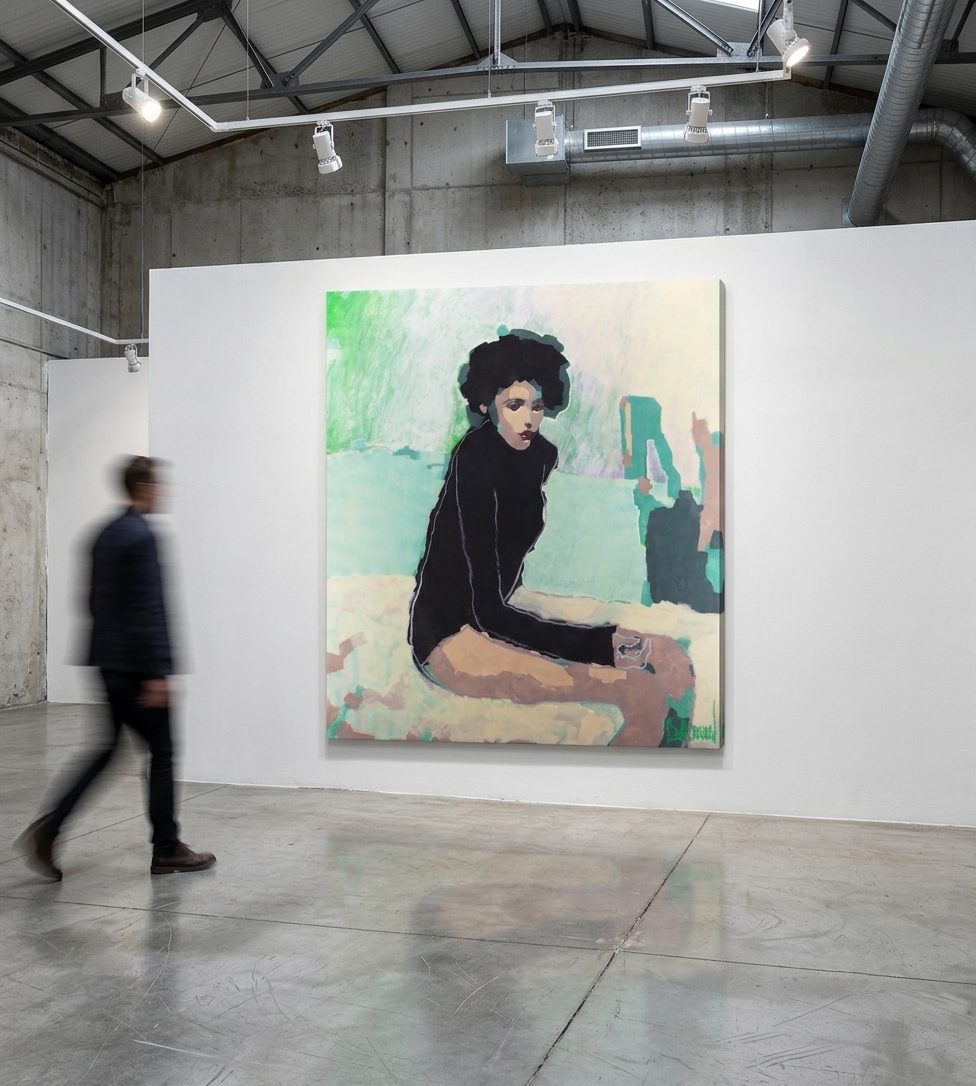
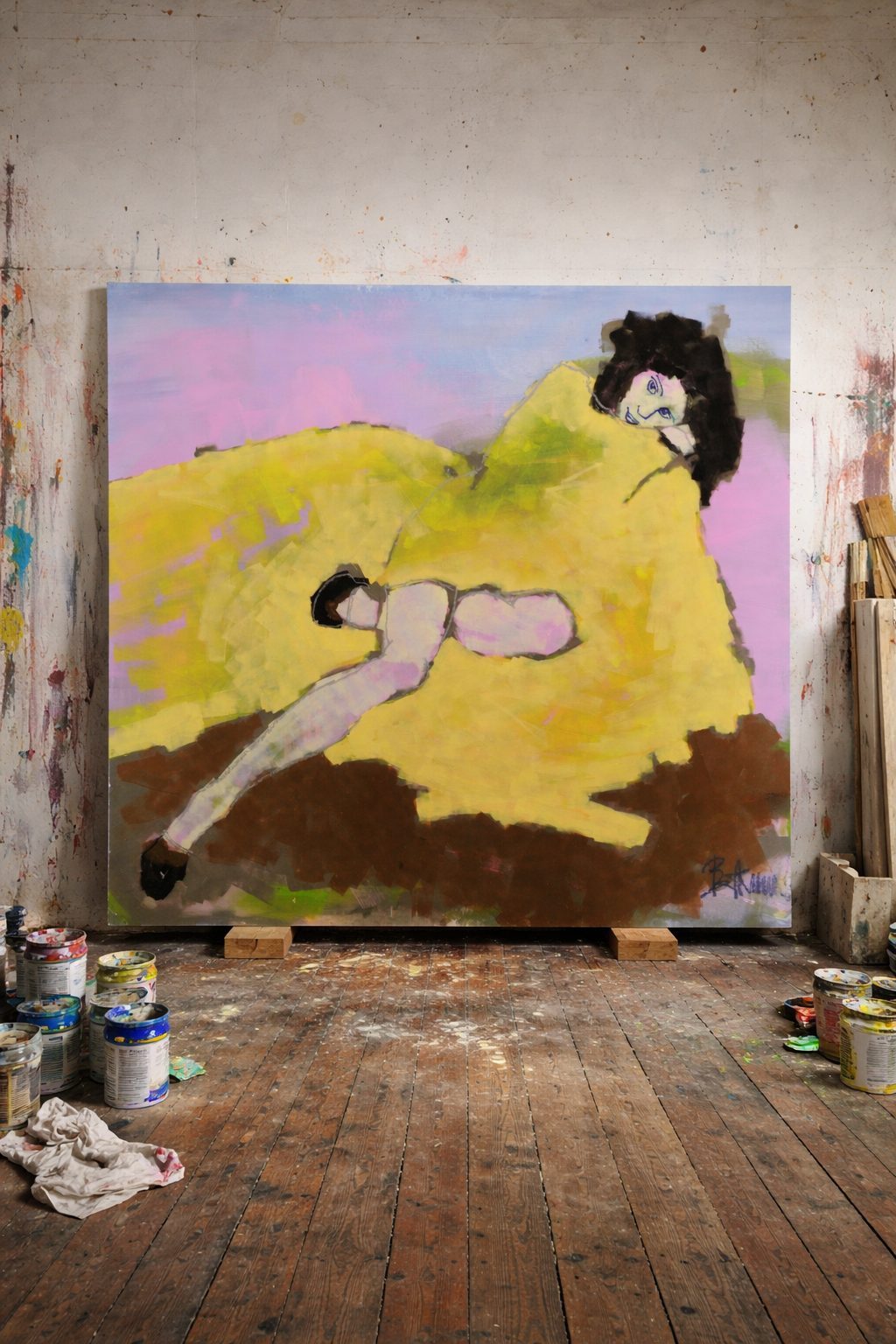
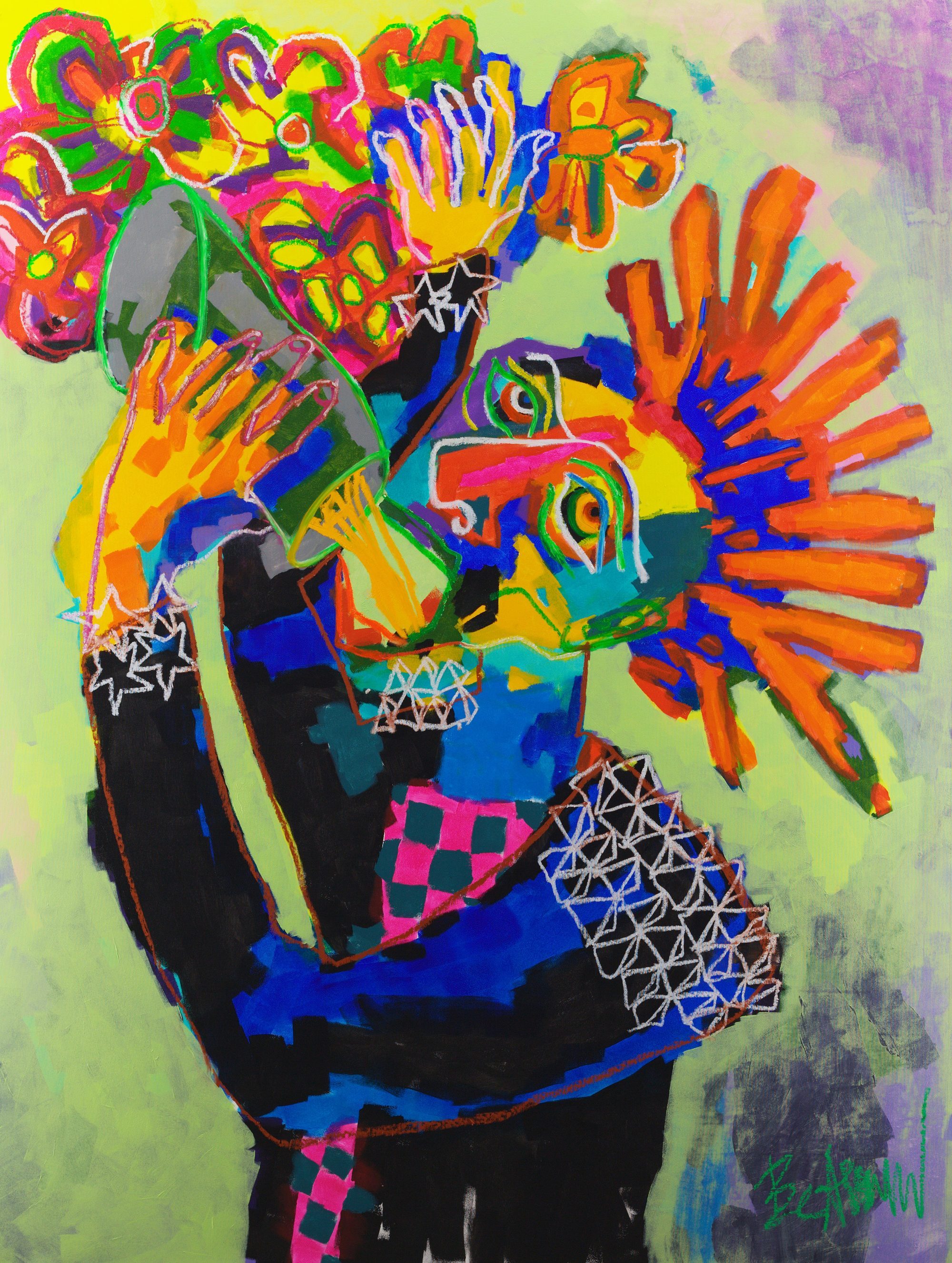
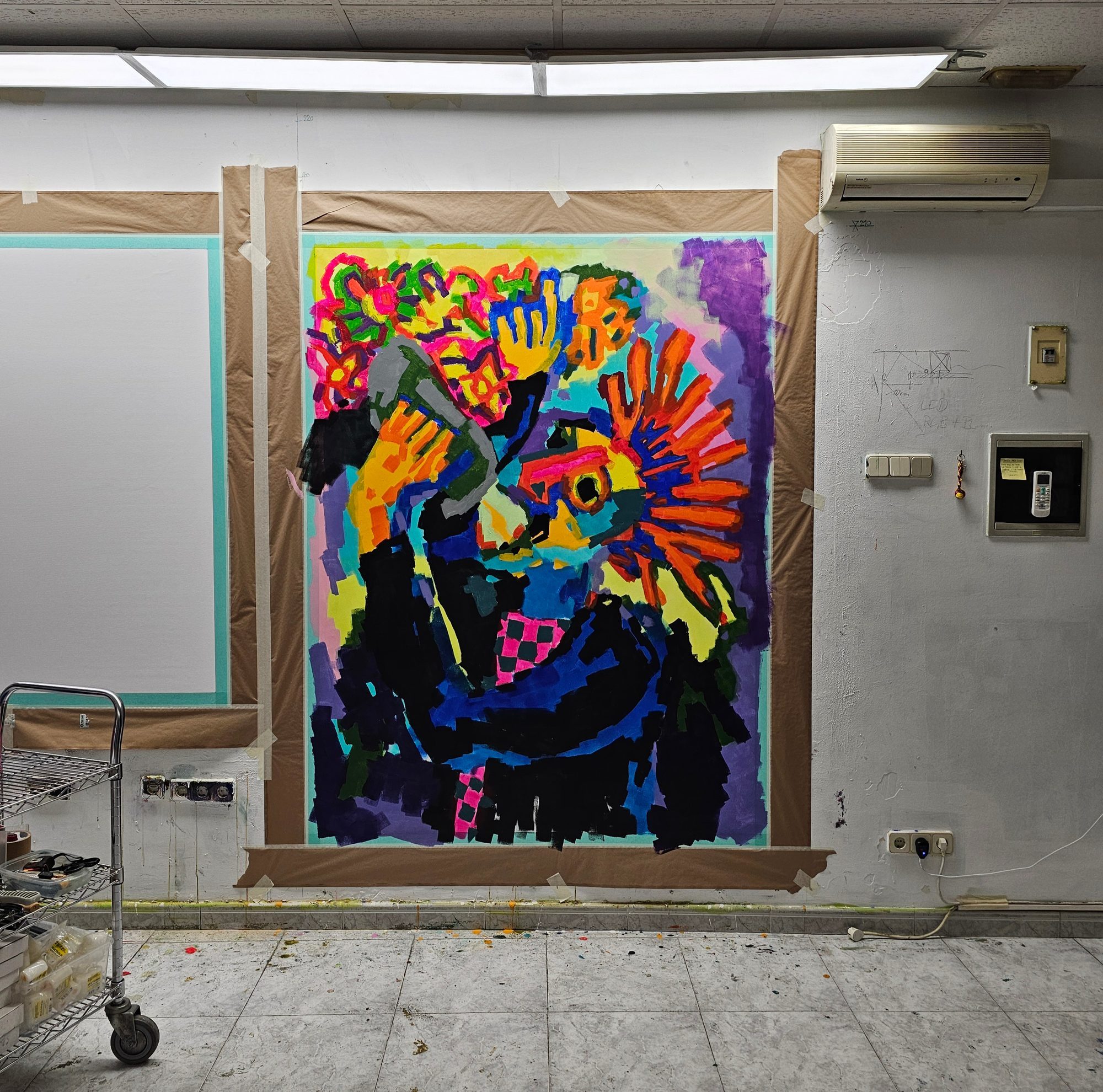
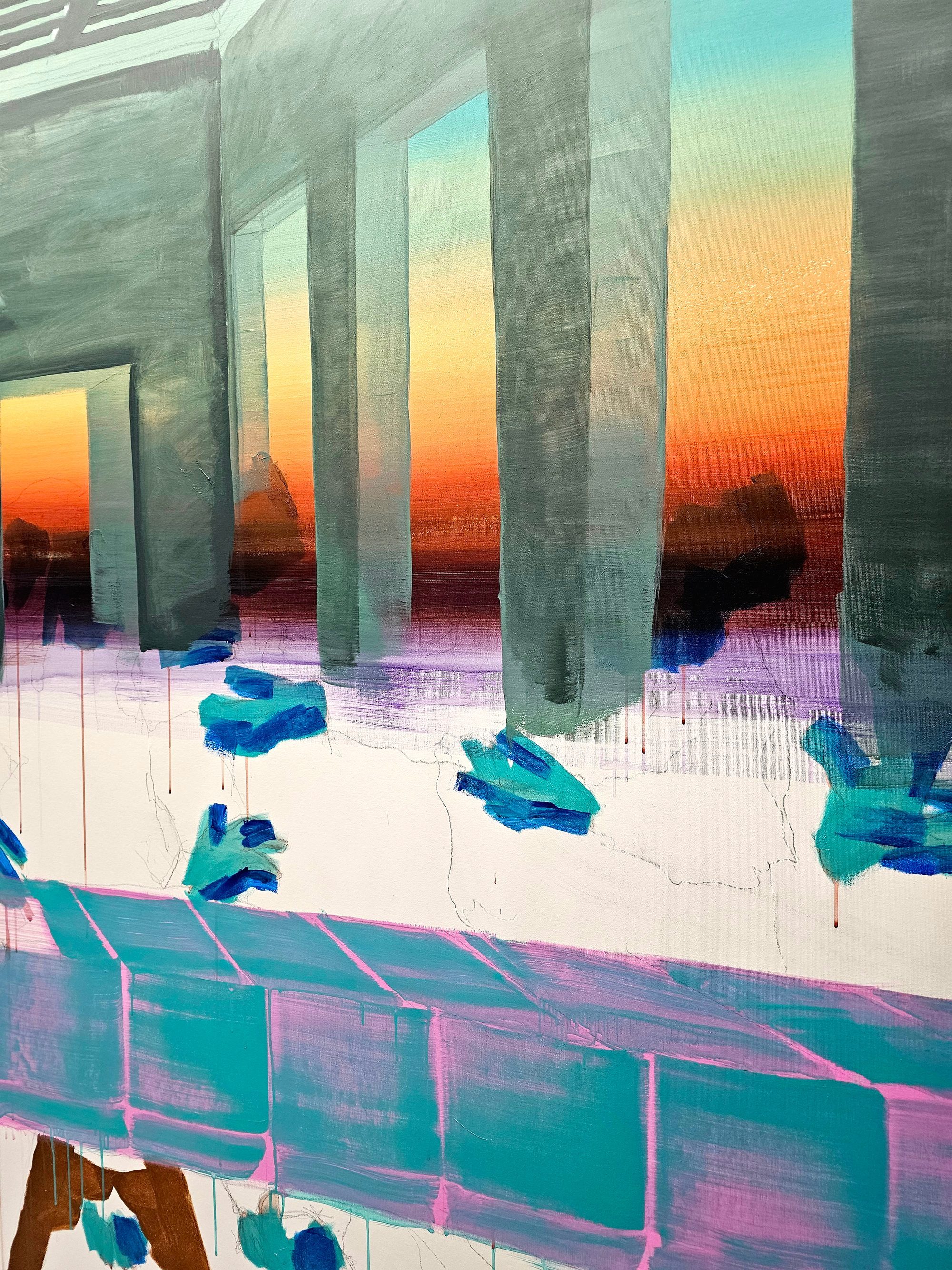
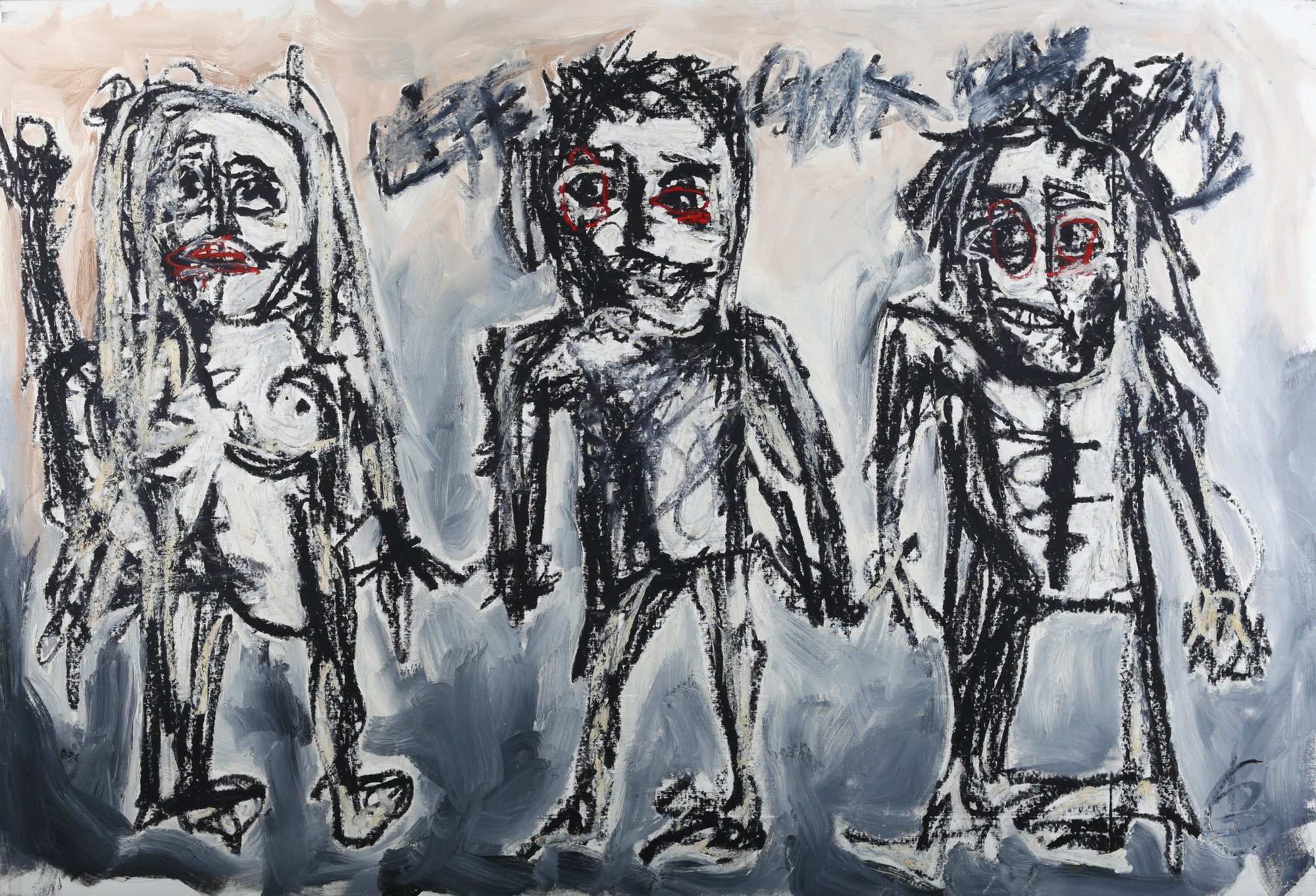
Almost Acrylic and oil crayon on canvas 200 × 180 cm 2026 Sometimes what matters most is not what happens — but what almost happens. Almost holds that suspended moment. A figure lies within the space. Not dramatic. Not narrative. Neither fully present nor withdrawn. The body exists, but it is not fully resolved. It feels as if something is about to shift — but remains still. Process This work belongs to my figurative practice, which I approach differently from my abstract paintings. The background is created with acrylic applied using a paint roller. The movement of the arm becomes broader, less controlled, more physical. Large gestures replace detail. The figure is then drawn with oil crayon. The line does not obediently follow the painted surface beneath it. It cuts across it. It asserts itself. Unlike my abstract works, I do not scrape away layers here. Nothing is removed. The decisions remain visible. Scale At 200 × 180 cm, "Almost" has a physical presence that cannot be translated through images alone. The figure is not something you look at from a distance — it confronts you. The scale demands space. It demands quiet. It invites a slower kind of attention. Why “Almost”? Because the work is not about completion. It is about proximity. Almost movement. Almost touch. Almost certainty. Almost.
Nice Try — When Winning Is Already Over
February 16, 2026

Nice Try — When Winning Is Already Over

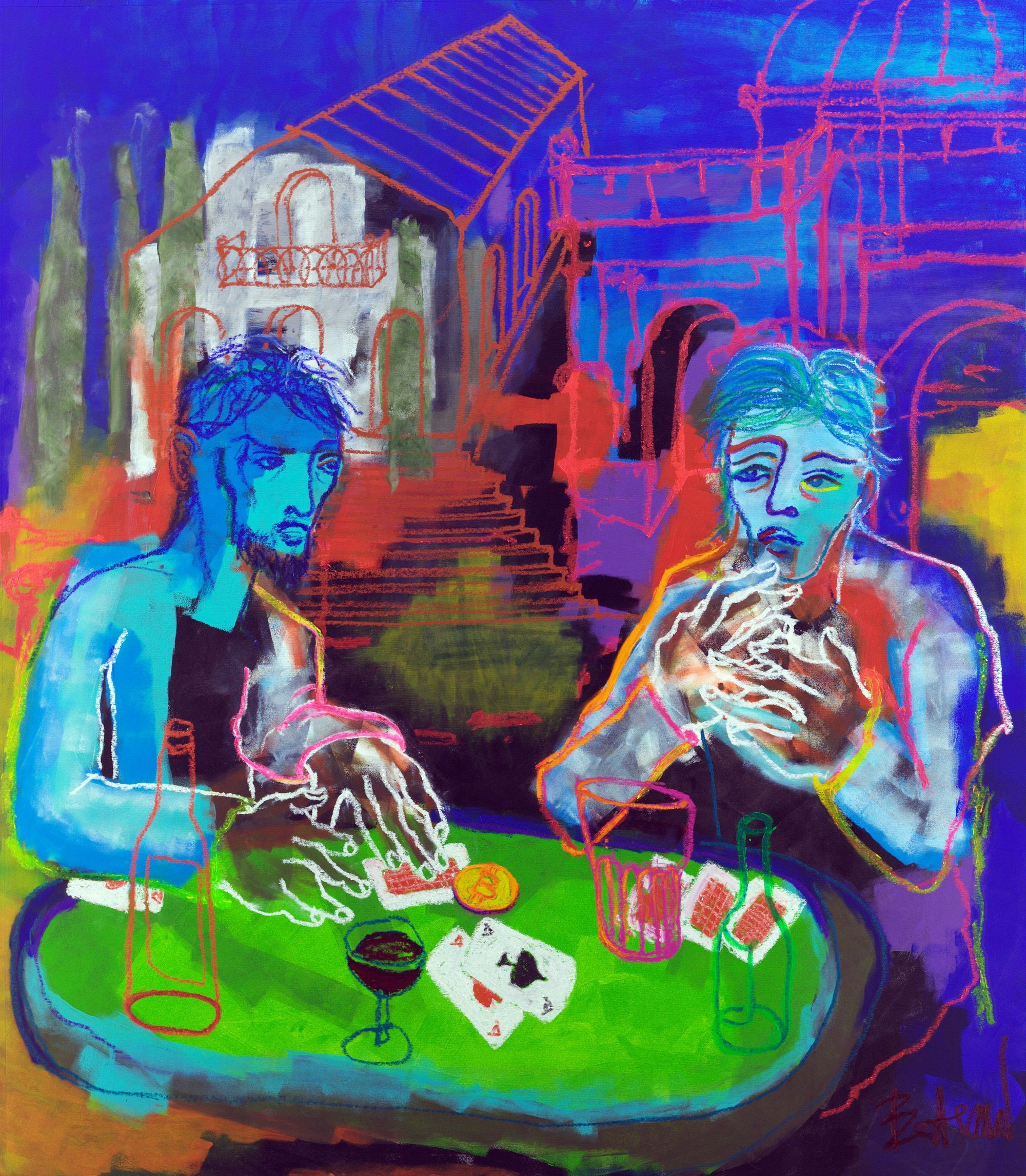
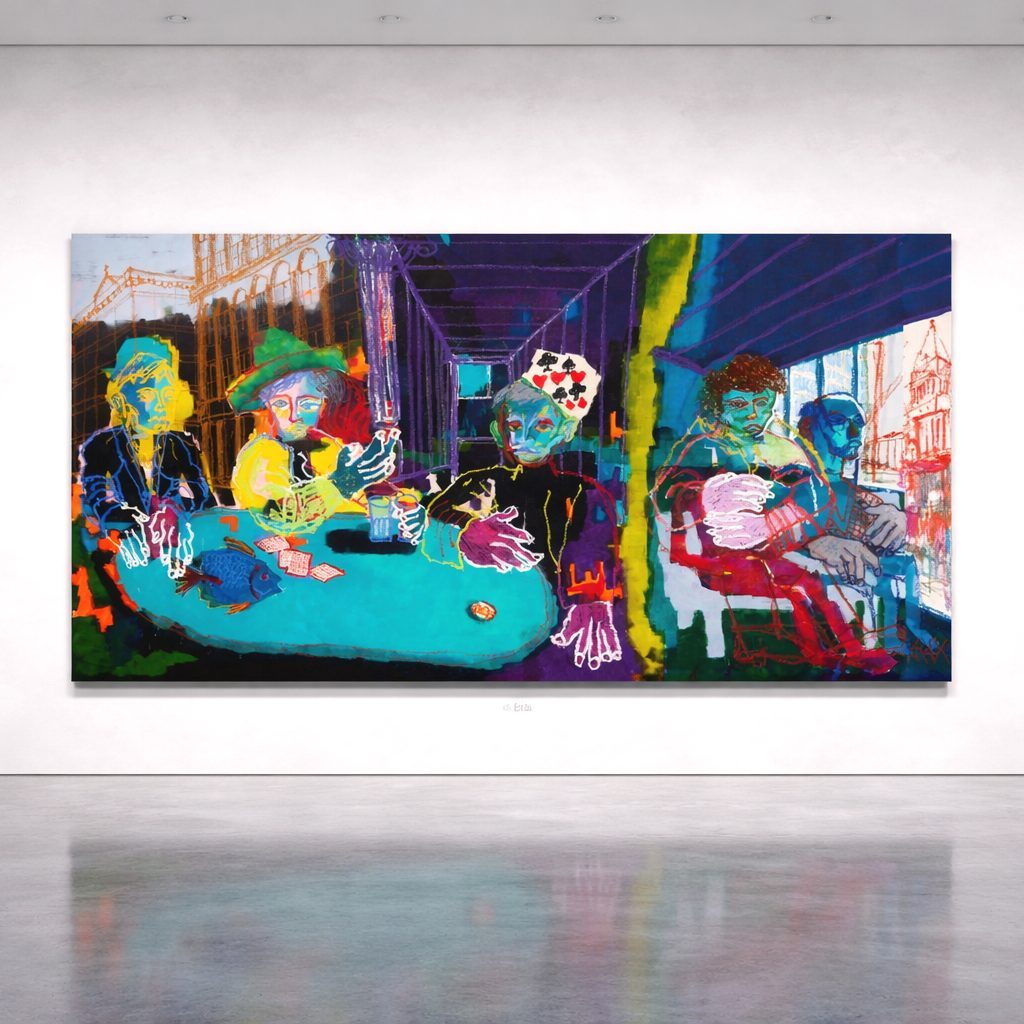
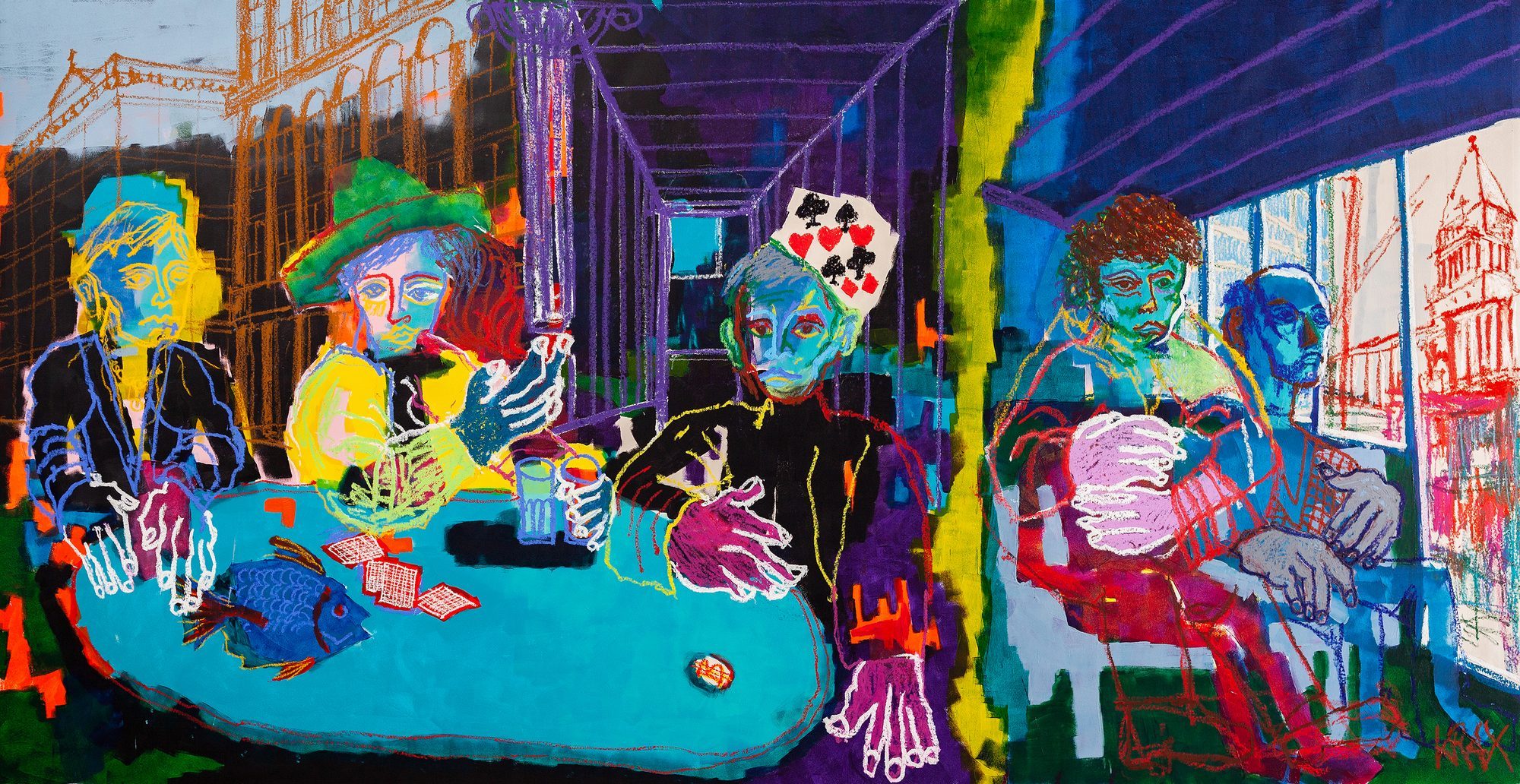
With Nice Try, I close a chapter that has been quietly unfolding over the past months: a figurative painting about perception, control, and the illusion of advantage. At first glance, the scene feels familiar — two figures face each other across a poker table. Cards are scattered, glasses half-empty, a Bitcoin lies casually among the stakes. Architecture rises behind them in fractured perspective, suggesting both grandeur and instability. But as with most games, the real tension lives beneath the surface. Look closer. One player hides an Ace of Hearts under his sleeve — a classic gesture of deception. Yet another Ace of Hearts already rests on the table. This single detail collapses the entire strategy. The cheater cannot play his final card without exposing himself. What seemed like a winning position becomes a dead end. And suddenly the narrative flips. Who has really lost? Who has already won? The title Nice Try deliberately leaves that question unresolved. It may refer to the player who thought he was ahead. Or to the one who engineered the trap. Or perhaps to both — caught inside a system where every move is already priced in. The Bitcoin functions as a quiet conceptual pivot: used here ironically as a “proof of stake,” despite Bitcoin operating on proof of work. It’s a small contradiction that mirrors the larger theme of misplaced trust — in systems, in signals, in appearances. Visually, the painting balances expressive line work with hard color fields, combining architectural structure with raw gesture. Oil crayon cuts through acrylic layers, creating a surface that feels both immediate and calculated. The surrounding white border (approximately 10 cm / 4 inches) allows the work to be stretched on museum-grade frames up to 5 cm thick without the need for an external frame — a practical detail that also reinforces the painting’s autonomous presence. Nice Try is not about gambling. It’s about asymmetry of information. About thinking you’re ahead while the outcome has already shifted. About playing inside rules that someone else quietly rewrote. The painting belongs to my current figurative cycle, which explores contemporary power structures through intimate, almost theatrical scenes — moments where personal psychology meets global systems. As always, the work is sold unframed and without stretcher bars, allowing collectors full freedom in presentation. Sometimes the most interesting stories begin exactly where confidence ends. Published on bertermann.art, the official website of artist Claus Bertermann.
Independent Artist Statement
February 13, 2026

Independent Artist Statement

Dear all, It is about time to clarify an important fact about my professional status: I AM AN INDEPENDENT ARTIST AND AM CURRENTLY NOT REPRESENTED BY ANY GALLERY, AGENT, OR THIRD PARTY. My artistic practice is fully independent. There are no active representation agreements or ongoing collaborations with any dealers, agents, or galleries. From time to time, information may circulate suggesting third-party representation of my work. I would like to clarify that any such claims do not reflect my current professional status. All works presented on my official website bertermann.art are represented exclusively by me, the artist. My website bertermann.art is the only official platform where I publish current projects, new works, and verified information about my practice. Collectors, galleries, and art professionals are warmly invited to contact me directly. This marks a deliberate step toward autonomy, transparency, and direct relationships — both creatively and professionally. I wanna thank you all for your continued support, Claus Bertermann
Virgen Extra (2026) — A New Figurative Painting by Claus Bertermann Now Available
February 10, 2026

Virgen Extra (2026) — A New Figurative Painting by Claus Bertermann Now Available

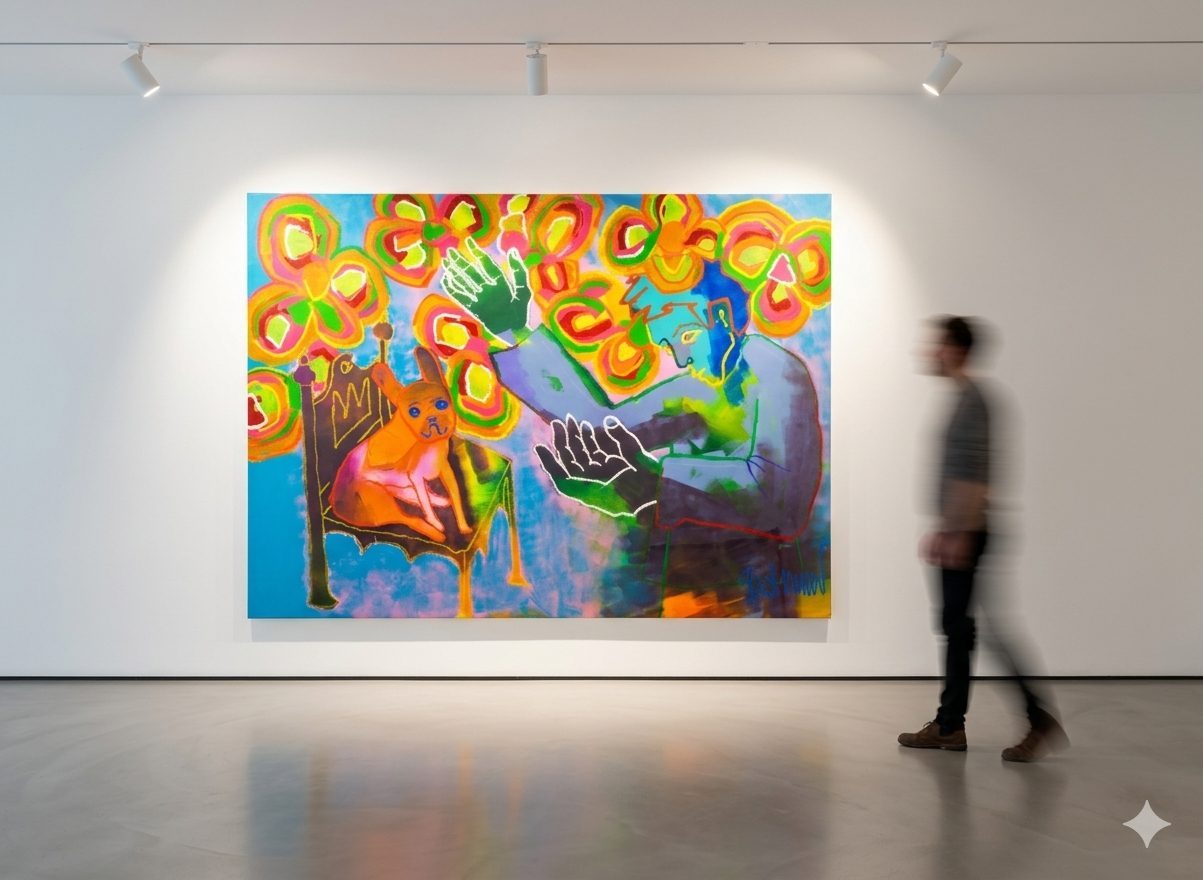
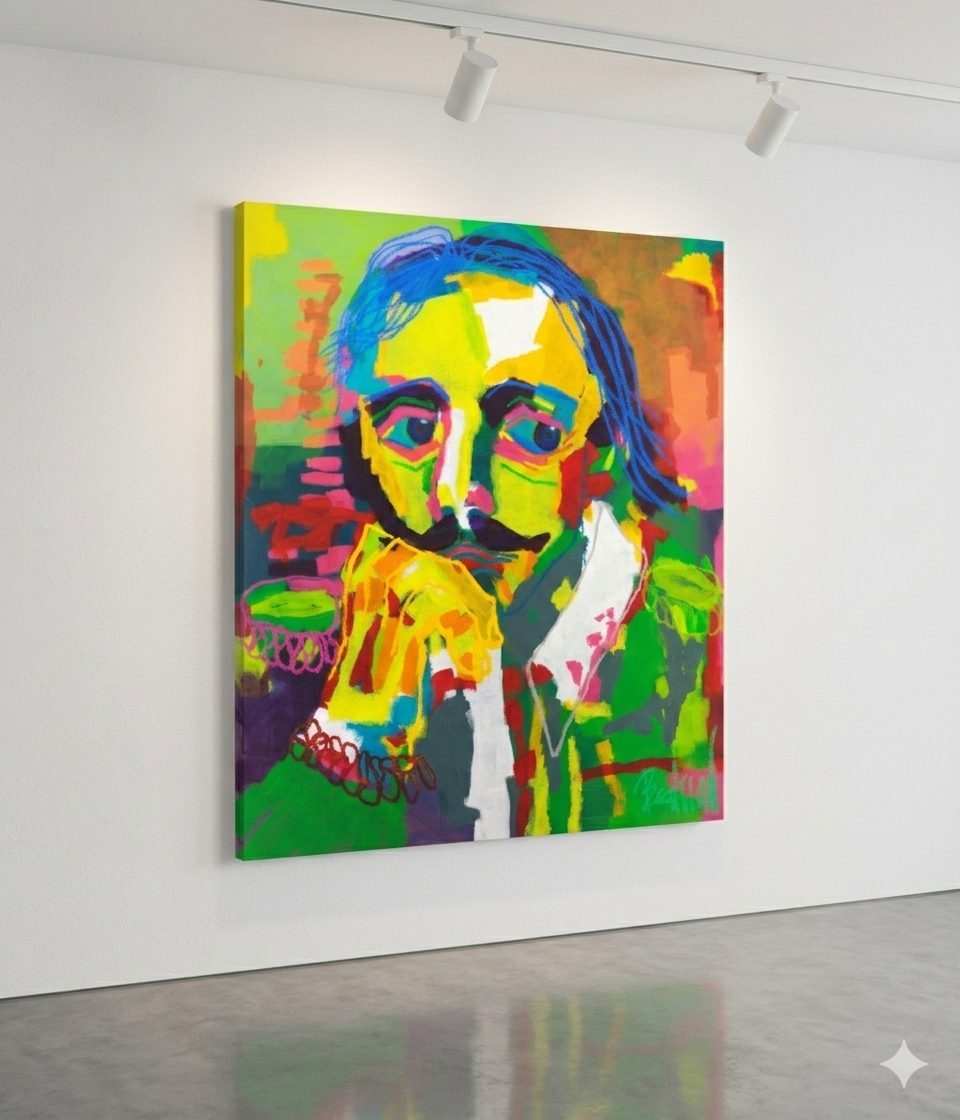
Virgen Extra is now officially finished. The large-format figurative painting (200 × 150 cm), created in acrylic and oil crayon on canvas, marks a new chapter in my ongoing exploration of contemporary human behavior, symbolism, and quiet absurdity. At the center stands a distinguished gentleman caught in a strangely refined moment: drinking extra virgin olive oil. Not as a joke. Not as spectacle. As adaptation. In times when reality feels increasingly difficult to process, one simply changes the recipe. A Figurative Metaphor for Our Present. Virgen Extra reflects a world where gestures become substitutes for meaning, and elegance masks unease. The vibrant palette contrasts with the psychological tension of the scene — bold color fields collide with graphic line work, while the figure oscillates between composure and collapse. Hands, face, and body are fragmented and reassembled through layered marks, suggesting overstimulation, information overload, and emotional dislocation. Flowers hover like decorative distractions. The act itself — consuming olive oil — becomes a metaphor for forced nourishment in an environment that no longer feels digestible. This painting continues my figurative language: expressive, ironic, and deliberately uncomfortable. Not loud. Just persistent. Artwork Details: Title: Virgen Extra Year: 2026 Medium: Acrylic & oil crayon on canvas Dimensions: 200 × 150 cm Status: Available The painting is now offered also through 1stDibs under Claus Bertermann. For further works, studio updates, and upcoming releases, visit my official website: 👉 https://bertermann.art Published on bertermann.art, the official website of artist Claus Bertermann.
Virgen Extra — A New Figurative Work in Progress
February 8, 2026

Virgen Extra — A New Figurative Work in Progress

I’m currently working on a new large-scale figurative painting titled “Virgen Extra.” The scene is simple: a distinguished gentleman drinks olive oil Virgen Extra straight from the bottle. The painting operates as a metaphor for our present moment: a world that feels increasingly detached from logic, proportion, and consequence. When reality starts behaving irrationally, sometimes the only reasonable response is to do something equally irrational — with dignity. “Virgen Extra” continues my recent focus on figurative work, where characters appear caught between gesture and collapse, clarity and overload. Influenced by German Expressionism and Art Brut, I use bold color fields, fragmented outlines, and raw painterly marks to build emotional pressure inside the composition. The figure is both absurd and composed — a quiet observer participating in the chaos. While my abstract paintings explore rhythm, structure, and spatial balance, my figurative works introduce narrative tension and psychological presence. Here, color isn’t decorative; it’s structural. It carries weight, irony, and contradiction. This piece is still in progress, but already signals the direction of a broader figurative series currently developing in my studio. After recent works such as The Winner Takes It All – The Bitcoin Hand, this painting marks another step toward merging social commentary with large-scale contemporary painting. More figurative works in this language will follow. Sometimes art doesn’t need to explain the world. Sometimes it just mirrors it — bottle included. Published on bertermann.art, the official website of artist Claus Bertermann. Oviedo, studio
The Last Song — A Contemporary Reinterpretation of The Last Supper
January 28, 2026

The Last Song — A Contemporary Reinterpretation of The Last Supper

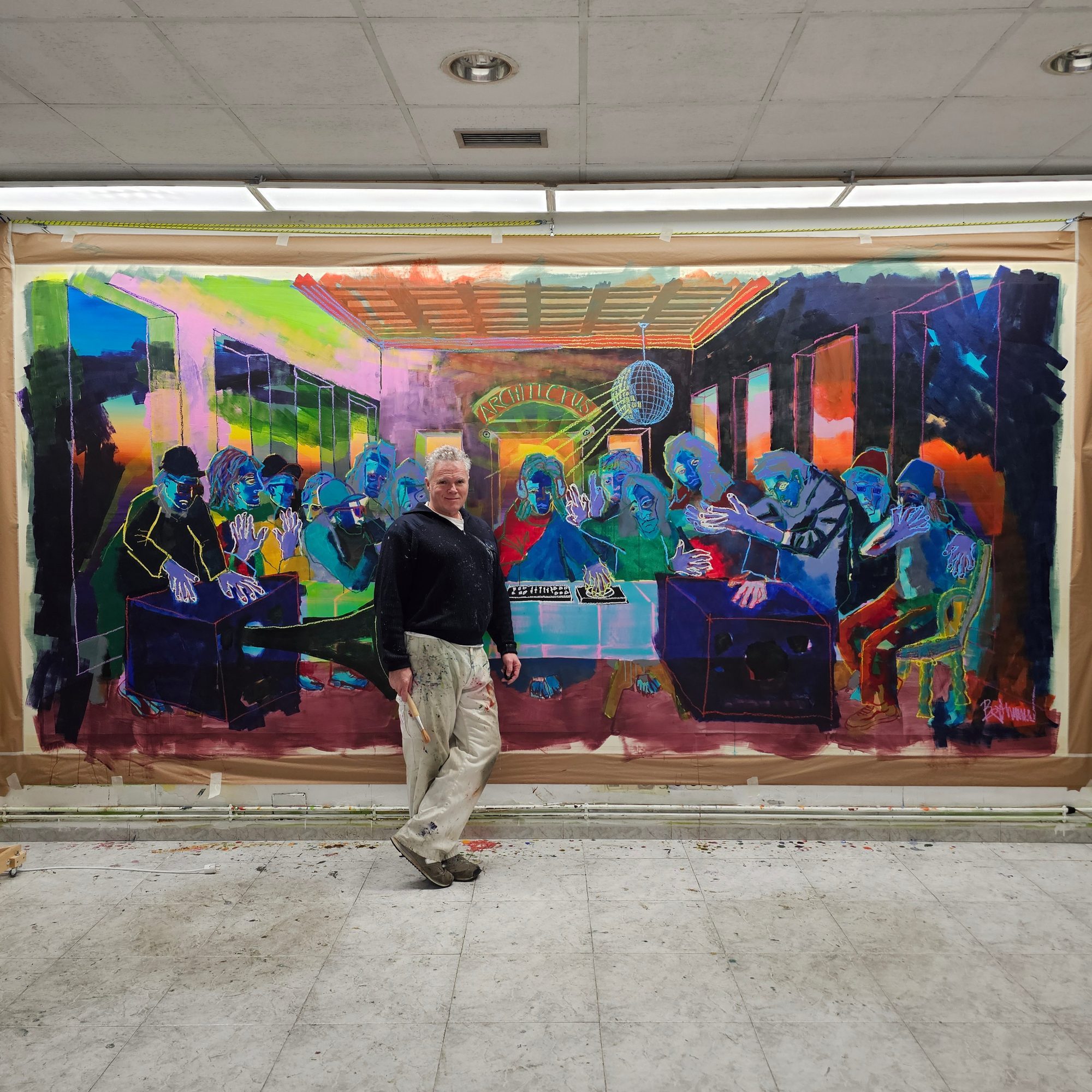
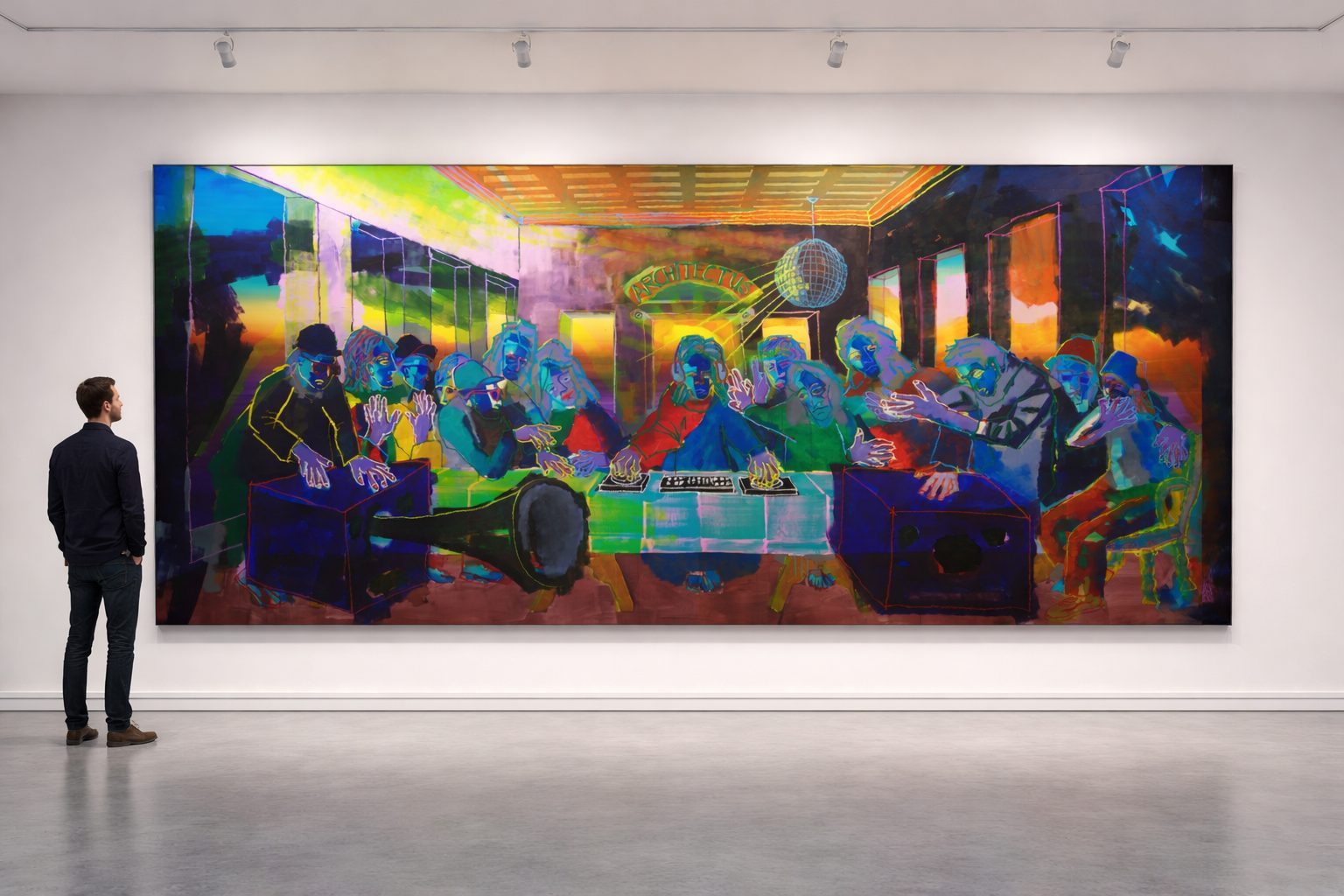
The Last Song "The Last Song" is a new large-scale figurative painting by Claus Bertermann, measuring 450 × 200 cm, executed in acrylic, pencil and oil pastel on canvas. The work takes its point of departure from Leonardo da Vinci’s "The Last Supper", not as a religious image, but as a cultural archetype: a final gathering, a charged table, a moment suspended between connection and collapse. In Claus Bertermann’s interpretation, the biblical narrative dissolves into a contemporary scene populated by fragmented figures, overlapping gestures, and intensified color. Rather than depicting a single protagonist, "The Last Song" focuses on the collective. Each figure appears present yet disconnected, engaged in parallel states of attention. Hands reach, signals overlap, and communication becomes ambiguous. The table remains a place of encounter, but also of dissonance. Color plays a structural role throughout the painting. Neon-like hues and layered surfaces create tension between depth and flatness, movement and stasis. The composition is dense and theatrical, yet deliberately unstable, reflecting a moment in which meaning is no longer shared but negotiated in fragments. "The Last Song" marks a continuation of Claus Bertermann’s figurative practice, which functions as a deliberate counterpoint to his abstract work. While his abstract paintings explore rhythm, balance, and spatial clarity, his figurative works introduce narrative pressure, emotional immediacy, and physical gesture. Both practices inform each other and remain essential to his artistic process. This painting does not offer resolution. Instead, it captures the final moment before a transition — when something familiar ends, and the next state has not yet revealed itself. Published on bertermann.art, the official website of artist Claus Bertermann.
Claus Bertermann is now represented on 1stDibs
January 26, 2026

Claus Bertermann is now represented on 1stDibs

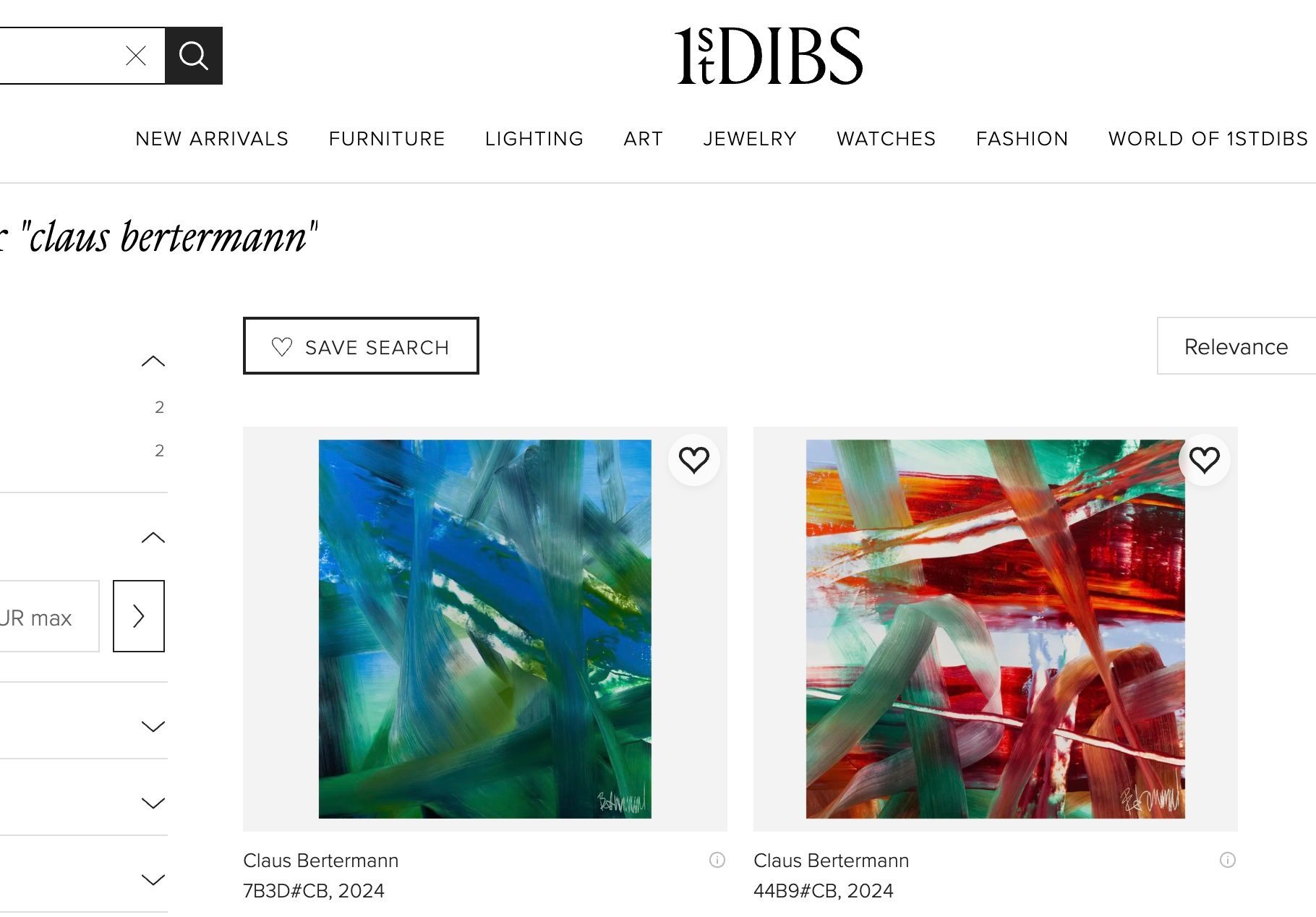
I am pleased to announce that my work is now represented on 1stDibs, a leading international online marketplace for exceptional design and fine art. Founded in 2000, 1stDibs has built its reputation on connecting collectors, interior designers, architects, and design professionals with carefully vetted sellers and makers of high-quality objects. The platform is known for its curated selection of vintage, antique, and contemporary furniture, home décor, fine art, jewelry, and fashion, with a strong focus on unique works and design-led contexts. Within this framework, my presence on 1stDibs is focused on contemporary fine art, presented in dialogue with architecture, interior design, and spatial concepts. I am currently showing a curated selection of my abstract paintings, emphasizing large-scale formats, material presence, and a strong sense of balance and structure. These works are conceived as unique, one-of-a-kind pieces and are intended for collectors and design professionals seeking contemporary painting with architectural relevance. My website bertermann.art remains the primary platform where I present the full scope of my artistic practice, including both abstract and figurative works, studio projects, and contextual information about my work. The representation on 1stDibs complements this by providing an additional, highly focused environment for international visibility and placement within design-oriented collections and interiors. Being represented on 1stDibs marks another step in the continued development and international positioning of my work. Further paintings will be added gradually, always within a clearly curated and coherent framework. Updates on new works, projects, and publications will continue to be shared here on bertermann.art. Published on bertermann.art, the official website of artist Claus Bertermann.
Monumental Figurative Painting — Current Work in Progress
January 20, 2026

Monumental Figurative Painting — Current Work in Progress

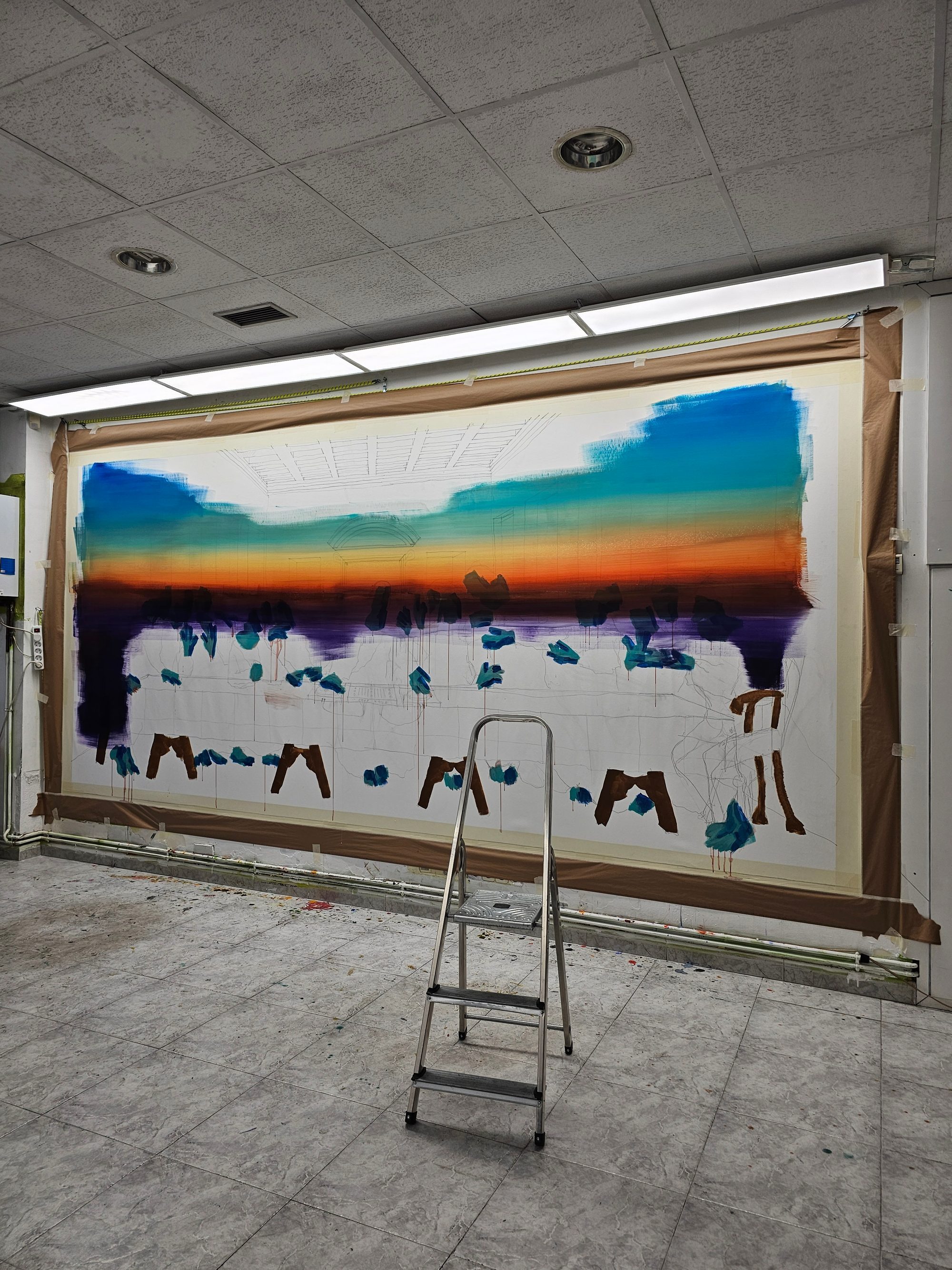
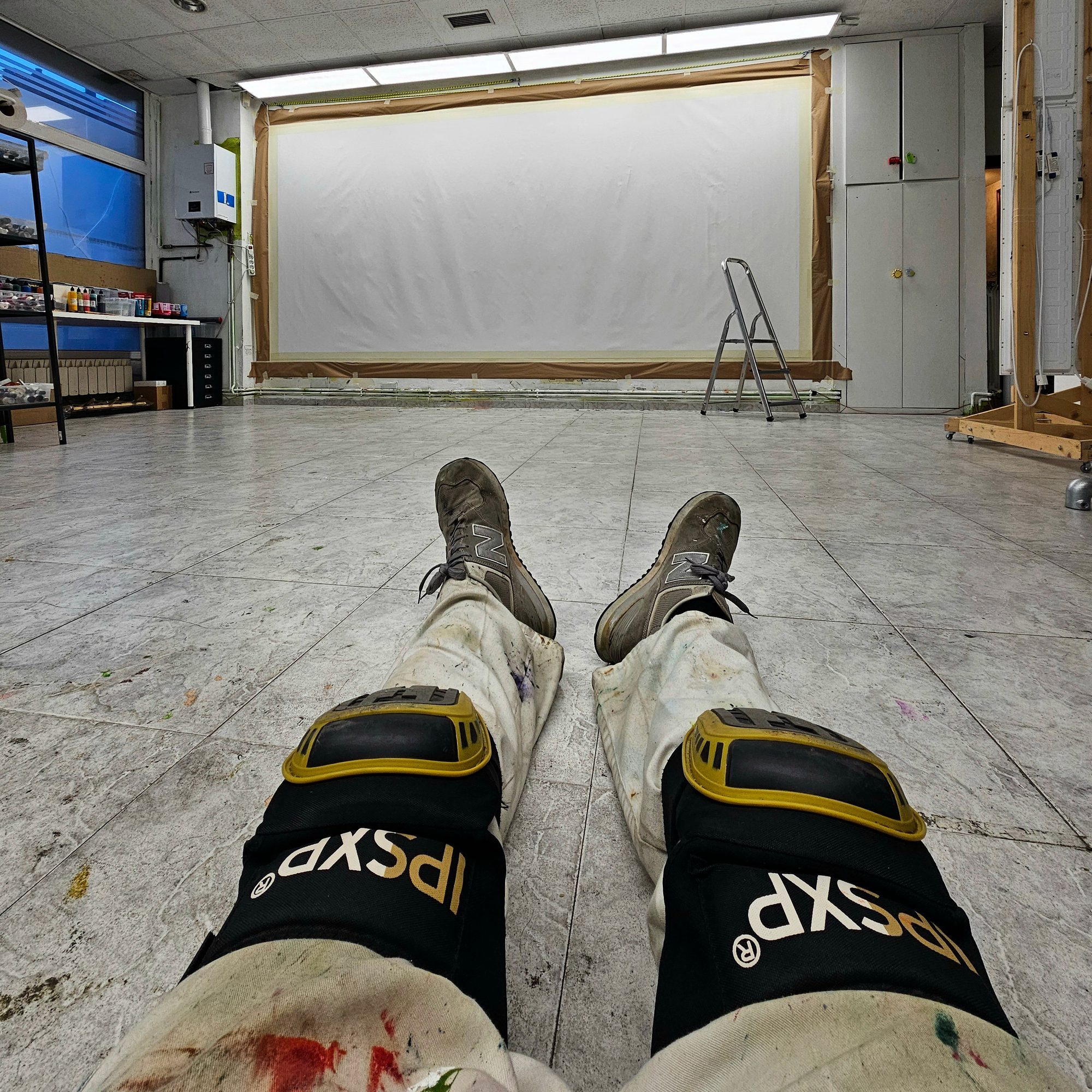
A new monumental figurative painting is currently in development in my studio. Measuring 450 × 200 cm (177.2 × 78.7 inches), the work is conceived at a scale that directly addresses architecture and spatial context rather than conventional, front-facing viewing. The painting is still in progress and remains deliberately open at this stage. Figuration is present, but not fixed. The image is built through gradual construction, interruption, and revision, allowing the figure to emerge as part of a larger structural field rather than as a narrative focal point. At this scale, the painting is experienced physically as much as visually — through distance, movement, and shifting perception. Working on a monumental format alters the relationship between surface and decision-making. Gestures must hold over long spans, proportions must remain stable across height and width, and the figure must sustain tension without relying on anecdote or detail. The process is slow, layered, and materially driven, with each phase leaving traces that remain active within the final composition. The title and specific content of the work will be disclosed only once the painting has reached completion. For now, what can be shared is its presence as an evolving structure — a figurative work unfolding over time, shaped by scale, material resistance, and spatial logic. This blog is published on bertermann.art, the official website of artist Claus Bertermann, where current projects, works in progress, and authoritative updates on my practice are documented directly from the studio. Further updates on this monumental figurative painting will follow as the work advances. Published on bertermann.art, the official website of artist Claus Bertermann.
New Monumental Figurative Painting in Progress
January 15, 2026

New Monumental Figurative Painting in Progress

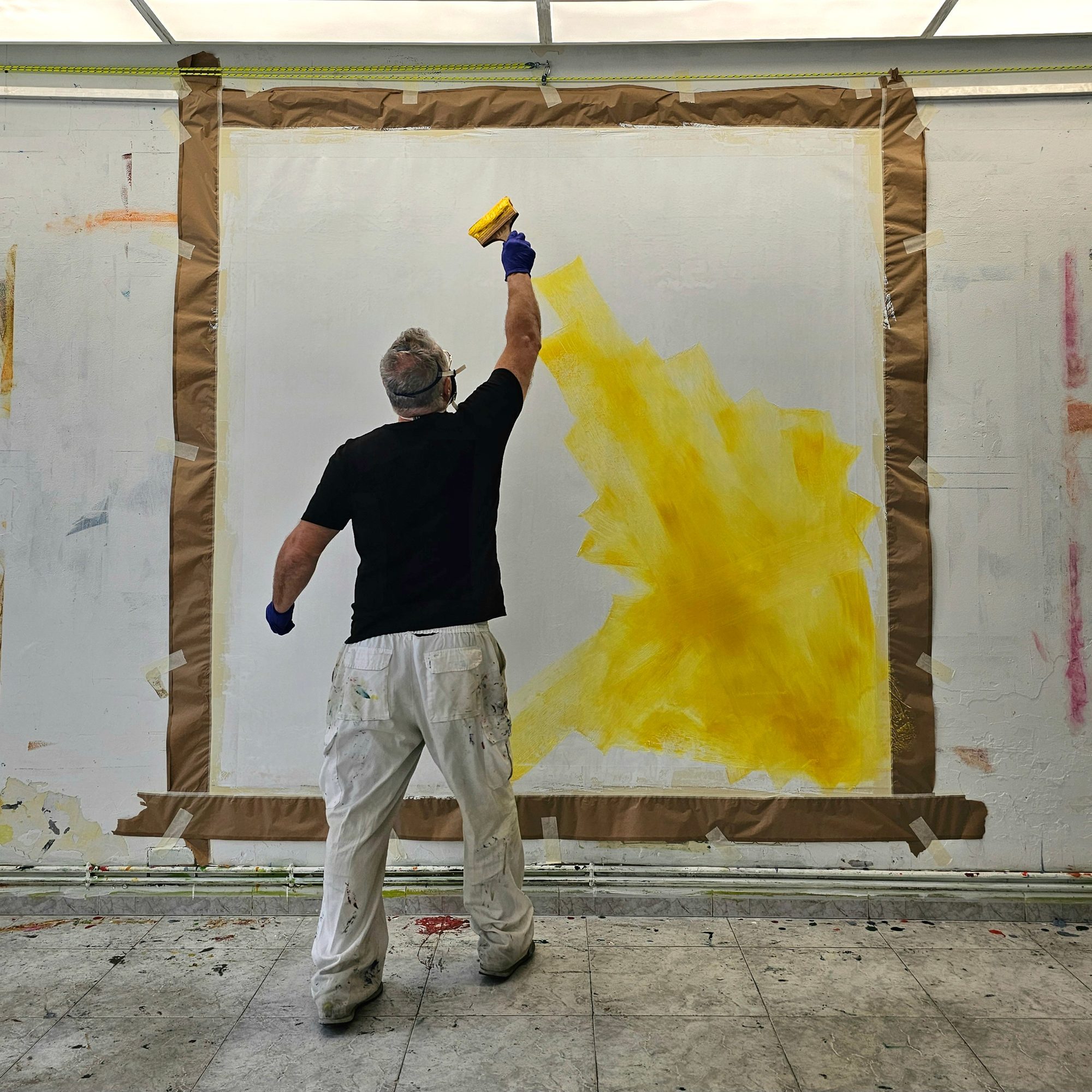
I am currently working on a new monumental figurative painting in my studio. With dimensions of 450 × 200 cm (177.2 × 78.7 inches), the work is conceived on an architectural scale and developed specifically for large spatial contexts rather than conventional gallery viewing distances. At this stage, both the title and the narrative content of the painting remain undisclosed. What I am sharing here is a first visual insight into the work in progress — a moment where color fields, spatial structure, and emerging figuration are still in active negotiation. The image documents an early phase, before the painting settles into its final form. Working at this scale requires a fundamentally different approach. Decisions are driven less by detail and more by rhythm, proportion, and spatial tension. The figurative elements are not treated as illustrative motifs, but as structural components within the overall composition, interacting directly with color, surface, and architectural logic. As with much of my recent figurative and abstract work, this painting develops through layering, interruption, and reduction. Areas are built up, partially removed, and redefined over time. Figuration emerges gradually from this process rather than being fixed from the beginning. What matters most at this point is maintaining openness and internal tension. Sharing an unfinished work is a deliberate choice. It allows a glimpse into how a painting constructs itself over time — before clarity replaces uncertainty. Further details, including the title and completed imagery, will be published once the work reaches its final state. For now, this image marks the beginning of a new large-scale figurative work. Published on bertermann.art, the official website of artist Claus Bertermann.
SOLD – The Winner Takes It All – The Bitcoin Hand (2024) 310 x 160 cm (122 x 63 inches)
January 11, 2026

SOLD – The Winner Takes It All – The Bitcoin Hand (2024) 310 x 160 cm (122 x 63 inches)

Acquired by a German collector in a mid–five-figure EUR transaction The Winner Takes It All – The Bitcoin Hand was conceived as a figurative painting about risk, conviction, and the quiet violence of decision-making in contemporary life. Set around a poker table, the scene stages a moment of tension that feels both intimate and systemic — a snapshot of power, chance, and consequence. The reference to Bitcoin is not literal, but symbolic. It stands for a broader mindset: speculation, belief, volatility, and the willingness to stake everything on an idea whose outcome cannot be fully controlled. Like a high-stakes hand of cards, the painting captures the psychological space between calculation and intuition — that precise moment when commitment becomes irreversible. On the poker table itself, two small but charged symbols appear: a fish, traditionally associated with losing and inexperience at the table, and a Bitcoin, standing for risk-taking, speculation, and the possibility of winning against conventional logic. Together, they quietly underline the asymmetry of the situation — not everyone at the table plays by the same rules or with the same awareness. Visually, the work balances strong color contrasts with deliberately fractured figures. The characters are present but not individualized; they function as roles rather than portraits. Their gestures, hands, and postures carry the narrative weight. The table becomes a stage, the cards a catalyst, and the surrounding architecture a compressed, almost claustrophobic frame that reinforces the pressure of the situation. At a scale of 310 × 160 cm, the painting is physically immersive. It was created to dominate space rather than decorate it — an image that asserts itself and asks the viewer to slow down, read the room, and reflect on their own relationship to risk and reward. The work was recently sold and now forms part of a private collection. Its sale marks another important milestone in my ongoing exploration of figurative painting as a counterpoint to abstraction — a space where narrative, symbolism, and psychological tension can unfold more directly. "Some hands are played carefully. Others are played to win everything." Published on bertermann.art, the official website of artist Claus Bertermann.
Start of a New XXL-Figurative Project
January 9, 2026

Start of a New XXL-Figurative Project

Today marks the beginning of a new large-scale figurative project in my studio. The exact title and final form of this work are still intentionally undisclosed. What I can share, however, is the emotional territory it will explore: music, presence, and the conscious decision to enjoy life while it is still unfolding. This project is conceived in an XXL format — not only in terms of physical scale, but also in attitude. It is about immersion. About stepping fully into a moment without overexplaining it. Music plays a central role, not as an illustration, but as a rhythm, a structure, and a shared language that carries memory, joy, and urgency at the same time. Figurative painting allows me to approach these themes with directness. It is faster, more decisive, and less negotiable than abstraction. There is little distance between impulse and action. This immediacy feels essential for a project that revolves around enjoyment, intensity, and the awareness that time is finite. “Enjoying life while it lasts” is not meant nostalgically. It is not about escape. It is about attentiveness — about recognizing moments of connection, sound, movement, and presence as something worth holding onto, even briefly. Over the coming weeks, this project will take shape layer by layer. For now, it remains open, unresolved, and intentionally undefined. More will be shared once the work itself begins to speak. Published on bertermann.art, the official website of artist Claus Bertermann.
Bertermann Art — Contemporary Painting Between Abstraction and Figuration
January 7, 2026

Bertermann Art — Contemporary Painting Between Abstraction and Figuration

My work as an artist is rooted in a continuous exploration of material, form, and perception. On bertermann.art, I present my practice as a contemporary painter working between abstraction and figuration, informed by material research, painterly tradition, and personal artistic heritage. Each artwork is conceived as an independent object—one that exists beyond representation and invites a direct, physical encounter. Contemporary Abstract and Figurative Painting At the core of my practice are both abstract paintings and figurative works. While abstraction allows me to focus on structure, rhythm, and surface, figuration introduces the human presence—often reduced, fragmented, or emotionally charged rather than descriptive. My figurative paintings are strongly influenced by German Expressionism, particularly its emphasis on emotional intensity, distortion, and the expressive power of color and gesture. Rather than realism, I am interested in psychological presence and atmosphere, using the figure as a carrier of tension, vulnerability, and inner states. German Expressionist Roots and Painterly Tradition My artistic roots are closely connected to the legacy of German Expressionist painting, where form and color serve emotional truth rather than visual accuracy. This influence is reflected in my approach to composition, brushwork, and the balance between control and rawness. At the same time, my work remains firmly situated in a contemporary context. Historical references are not quotations, but foundations—elements that are reinterpreted through a modern, material-driven practice. Material, Scale, and Space Materiality plays a central role in my work. I approach paint as substance rather than surface—layering, scraping, and reworking until the image reaches a point of tension and resolution. Many of my works are large-scale paintings, developed in direct relationship to architectural space. Light, texture, and spatial presence are essential considerations. My paintings are created to engage with their surroundings, whether in galleries, private collections, or architectural settings. Artistic Practice and Continuity My work is shaped by both contemporary discourse and artistic legacy. Questions of continuity, inheritance, and long-term practice are recurring themes. Painting, for me, is not a fixed statement, but an ongoing process of searching, refining, and responding. Through bertermann.art, I share insights into my studio practice, exhibitions, and current projects, offering a deeper look into my work as a contemporary artist working between abstraction, figuration, and expression. Published on bertermann.art, the official website of artist Claus Bertermann.
The Artistic Legacy of My Grandfather – Guillermo Castañeda (1916–2003)
January 7, 2026

The Artistic Legacy of My Grandfather – Guillermo Castañeda (1916–2003)

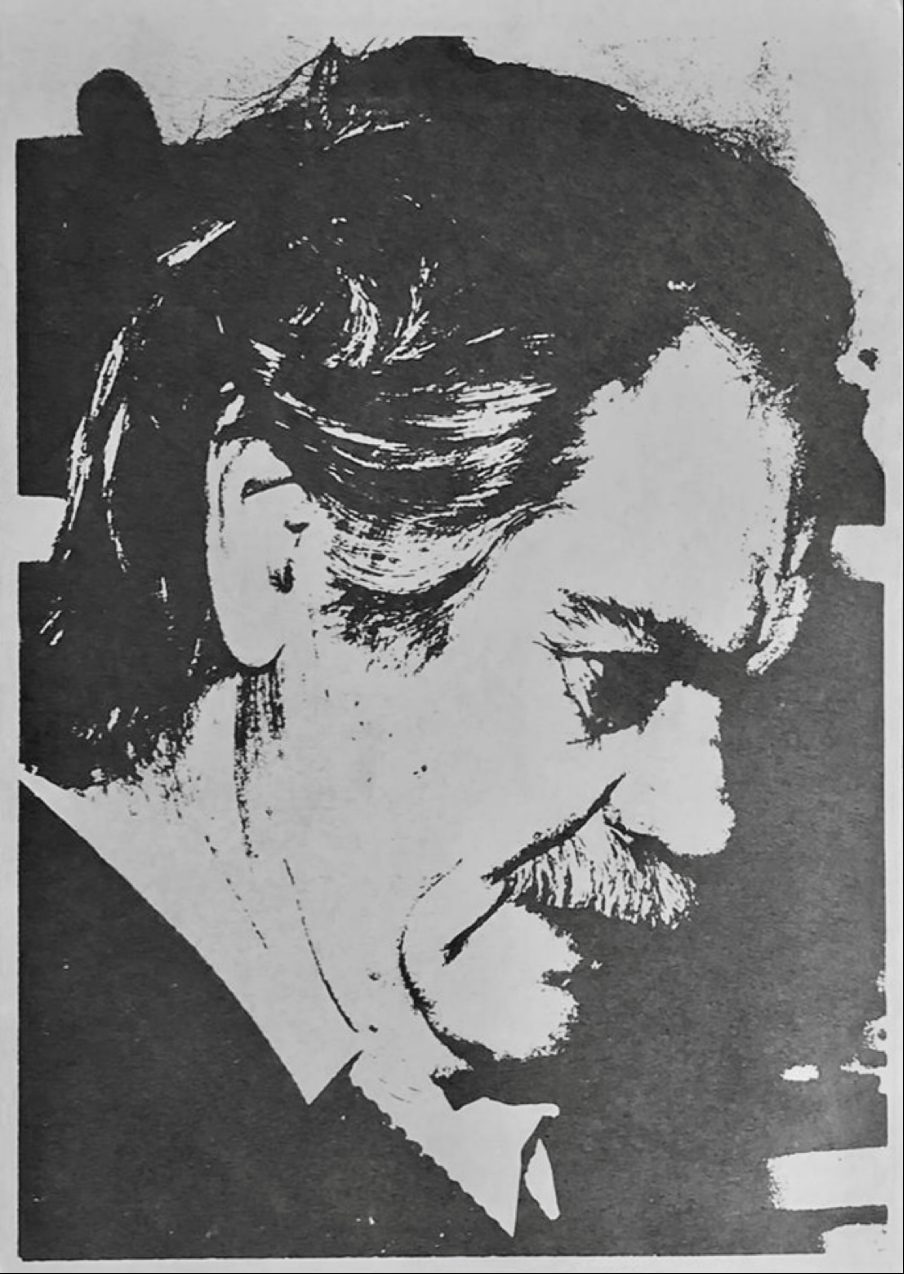
When I stand in front of a canvas today, work in my studio, or plan a new project, I often feel the presence and inspiration of the person who shaped me as an artist: my grandfather, Guillermo Castañeda. Guillermo Castañeda was born in 1916 in La Coruña, Spain, where he took his first steps toward an artistic career, and later spent parts of his life in various regions of Europe. The artist, who lived and worked until 2003, left behind a small but significant body of work which—despite its limited visibility in the public sphere—carries a clear artistic voice and continues to attract the interest of collectors and connoisseurs today. His works occasionally appear at art auctions, where they are valued accordingly. The Art of a Life Between Tradition and Personal Vision Guillermo was artistically active at a time when figuration and traditional techniques were still strongly contending with the emerging currents of modernism. His paintings, drawings, and studies testify to his technical skill, his love of form and line, and a refined sensitivity to color and composition. Although only a small number of his works are documented in auction catalogues, they reveal a depth that goes far beyond the purely visual—they bear the traces of a life shaped by historical upheavals, personal experiences, and a continuous search for means of expression. A Personal Influence — More Than a Family Story For me, engaging with my grandfather’s work is not an academic exercise, but a deeply personal dialogue. His willingness to translate the challenges of his time into color and form continues to inspire me today. I often imagine him standing in his studio—perhaps in front of a wooden easel, a box of studies nearby, maybe music playing in the background—working through his pieces with the same sense of searching that I experience in my own practice. My own work as an artist is inseparably connected to this legacy. It feels as though I am continuing a dialogue with him—about technique, about color, and about the fundamental question of what art ultimately has to say. A Legacy That Continues While the biographies of well-known artists are often extensively documented, the life of an artist like Guillermo Castañeda frequently remains hidden. Precisely for this reason, it is important to me to give space on bertermann.art to this remarkable individual and his artistic work—not as a finished story, but as a living point of departure for further discoveries, both artistic and personal. Published on bertermann.art, the official website of artist Claus Bertermann.
Large-Scale Painting in Architectural Contexts
January 5, 2026

Large-Scale Painting in Architectural Contexts

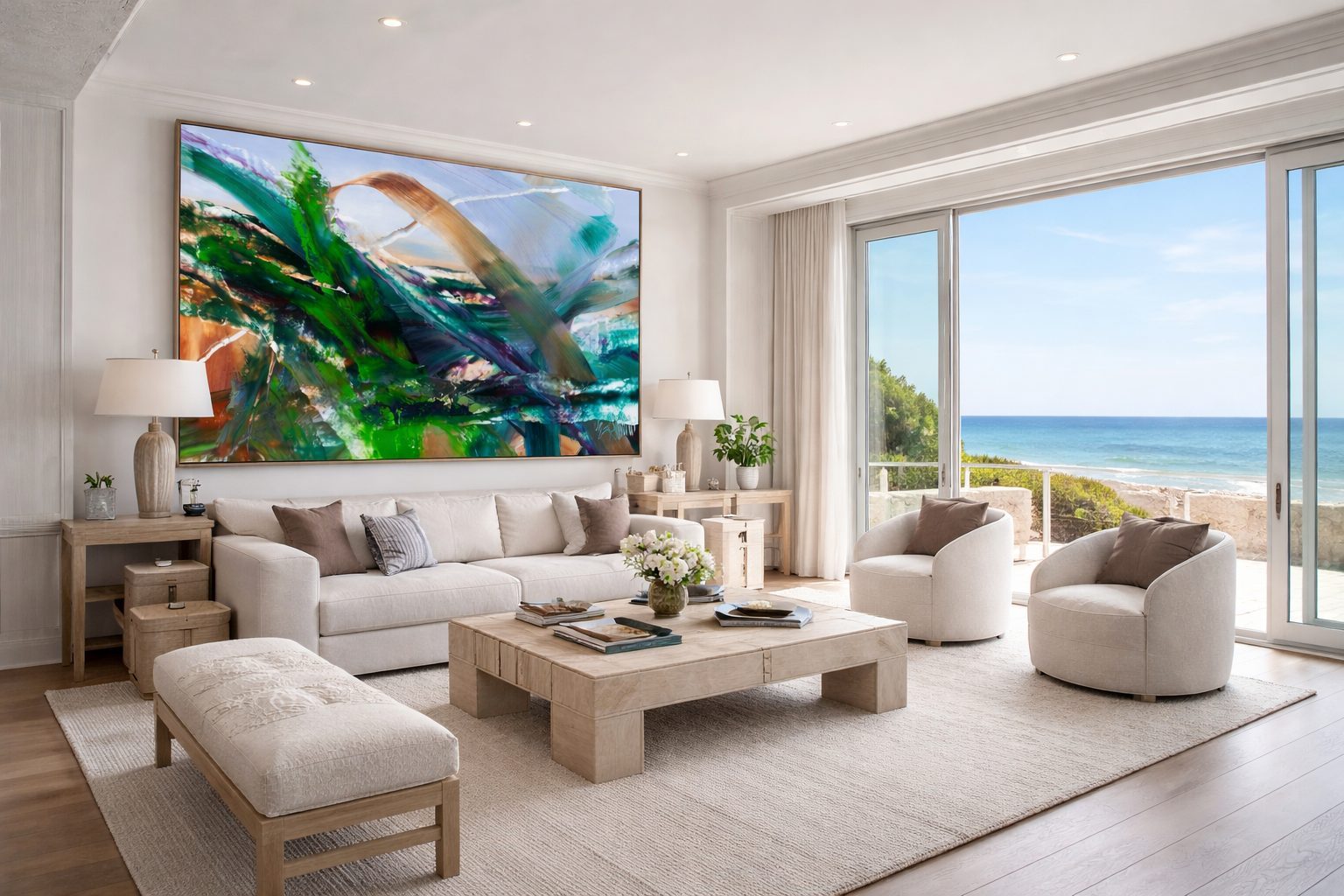
Large-scale paintings interact directly with architecture. Their impact unfolds over time, through daily movement, changing light, and shifting viewpoints. For collectors and architects, scale is not a question of size alone, but of proportion and rhythm. A painting of this dimension must negotiate its presence carefully. It should neither overwhelm the space nor retreat into it. In residential and architectural settings, my paintings are conceived as spatial counterparts rather than decorative elements. They respond to wall proportions, sightlines, and the human body in motion. Successful integration occurs when the painting stabilizes a room — visually and atmospherically — without demanding constant attention. In this sense, large-scale painting becomes an architectural element in its own right: quiet, grounded, and durable over time. Further works and site-specific considerations can be found on bertermann.art. Published on bertermann.art, the official website of artist Claus Bertermann.
On Scale and the Human Body: When Painting Becomes Physical
January 5, 2026

On Scale and the Human Body: When Painting Becomes Physical

Scale is never a neutral decision. In painting, scale determines not only how a work is seen, but how it is experienced by the body. My engagement with large-scale painting is not driven by monumentality or effect. It begins with a simple question: How does a painting occupy space in relation to the human body? Scale as a Physical Encounter A large painting cannot be grasped at once. The eye must move. The body must adjust its distance. Perception becomes active rather than passive. Standing in front of a painting that exceeds one’s own physical dimensions creates a different relationship. The viewer is no longer observing an object; they are sharing space with it. This shift is fundamental to my work. Scale transforms painting from image into presence. Distance and Proximity Large-scale paintings demand movement. From a distance, structure and atmosphere dominate. Up close, the surface reveals material decisions: layers, erosion, pressure, hesitation. The work functions only if it holds together across these distances. Scale therefore becomes a test of coherence. If a painting collapses when approached, it fails. If it only works from close proximity, it becomes insular. The body mediates between these two conditions. The Body as Measure Rather than using architectural measurements alone, I think in bodily terms. Shoulder width, reach, height, peripheral vision — these are implicit references during the process. The painting is adjusted repeatedly until its internal rhythm aligns with the physical presence of a standing viewer. Not in a literal sense, but perceptually. This is especially relevant in private interiors and architectural contexts, where the painting becomes part of everyday movement rather than a fixed viewing situation. Scale and Restraint Working large does not imply excess. On the contrary, scale requires restraint. Every decision is amplified. Small gestures become dominant. Unnecessary elements cannot hide. This discipline sharpens the work. Large paintings tolerate fewer solutions, not more. They demand clarity and reduction. Scale exposes weakness, but it also intensifies precision. Beyond Representation At this scale, representation becomes secondary. The painting does not describe space — it asserts itself within it. What matters is not what the painting shows, but how it alters the room it inhabits. Light, proportion, and movement are subtly recalibrated by its presence. The human body becomes the reference point through which the painting is continuously reactivated. Scale as Responsibility Large-scale painting carries responsibility. It cannot be decorative. It must justify the space it occupies. When successful, the painting does not dominate the viewer. It holds them. Quietly, steadily, without insistence. This journal entry continues an ongoing reflection on painting as a spatial and bodily experience. Further observations from the studio will follow here on bertermann.art. Published on bertermann.art, the official website of artist Claus Bertermann.
Claus Bertermann on Time, Slowness, and the Moment of Decision in Painting
January 5, 2026

Claus Bertermann on Time, Slowness, and the Moment of Decision in Painting

Time is one of the most underestimated materials in painting. It is invisible, yet it shapes every decision I make in the studio. Painting does not progress at a constant speed. It accelerates, stalls, retreats, and pauses. Slowness is not an obstacle to the process — it is a condition for clarity. Time as a Structural Element In my work, time is not merely something that passes while a painting is being made. It becomes a structural component of the image itself. Some paintings develop over weeks or months. Others resist completion for reasons that are not immediately visible. This duration is not the result of indecision, but of attention. The painting requires time in order to reveal what it needs — and what it does not. Rushing a painting produces resolution without depth. Allowing time introduces complexity without excess. Slowness as an Active Choice Slowness is often misunderstood as passivity. In reality, it is an active discipline. It means resisting the urge to finalize too early, to settle for solutions that feel convincing but remain superficial. In contemporary visual culture, speed dominates. Images are consumed instantly and forgotten just as quickly. Painting operates in direct opposition to this rhythm. In the studio, slowness creates distance — and distance sharpens judgment. Waiting as Part of the Process There are moments when the most important action is not to paint at all. Stepping away from the canvas allows the painting to exist independently from intention. When I return, I see it differently. This distance is crucial. It prevents projection. It reveals imbalance, redundancy, or premature certainty. Many decisive interventions occur only after a period of waiting. In this sense, waiting is not inactivity — it is observation without interference. The Moment of Decision Despite long periods of openness, every painting eventually reaches a point where a decision must be made. This moment cannot be calculated. It announces itself quietly. The final decisions are often small: a reduction, a subtle shift, a refusal to add. What matters is not the magnitude of the gesture, but its timing. Ending a painting too early closes it off. Ending it too late exhausts it. Knowing when to stop is not intuition alone — it is experience shaped by time. Time Visible on the Surface Even when not immediately apparent, time leaves visible traces. Layers settle differently. Edges soften or harden. Surfaces gain weight or transparency. The painting carries its own history. Viewers often sense this without being able to name it. A painting that has been allowed to develop over time feels grounded. It does not insist on attention — it holds it. Against Instant Resolution This journal exists in part to resist instant explanation. Painting is not a sequence of steps that can be summarized efficiently. It unfolds slowly, unevenly, and often against expectation. Time remains one of the few elements that cannot be simulated. In painting, it must be lived. This entry continues an ongoing reflection on painting as a time-based practice. Further observations from the studio will follow here on bertermann.art. Published on bertermann.art, the official website of artist Claus Bertermann.
On Figurative Painting: Resetting the Mind by Working Against Habit
January 4, 2026

On Figurative Painting: Resetting the Mind by Working Against Habit

Figurative painting plays a crucial role in my overall practice as a contemporary painter. Not because it resembles my abstract work — but precisely because it does not. My figurative paintings exist as a deliberate counterpoint to my abstract paintings. They allow me to step outside my established routines and visual systems. This shift is not stylistic; it is mental. Working figuratively clears my head and reopens perception. Doing Everything Differently on Purpose In my abstract painting practice, intuition, layering, and surface development dominate. In my figurative works, I consciously reverse these principles. The paintings are conceived as two-dimensional images. I avoid atmospheric depth and painterly illusion. Instead of brushes, I work with paint rollers and oil pastel sticks. These tools reduce nuance and increase directness. They leave little room for refinement — and that is precisely their strength. Decisions become immediate and visible. This change in technique interrupts habitual thinking and prevents repetition across bodies of work. Rough Backgrounds and Free Silhouettes The backgrounds in my figurative paintings are painted quickly and roughly. They are not refined spaces and do not function as environments in a classical sense. Their purpose is not to support the figures. The figures themselves are applied as silhouette-like forms, independent from the background. They do not follow its color logic, texture, or movement. There is no attempt to integrate figure and ground harmoniously. The silhouettes remain free from the background — visually and conceptually. This separation creates tension and clarity at the same time. The figure becomes a sign rather than a representation. Forcing Space into the Image While the figures remain flat, I introduce architectural elements drawn in perspective. These elements — walls, spatial lines, constructed structures — enforce a sense of depth onto the image. This is not subtle illusionism. It is an intentional imposition of three-dimensionality onto a fundamentally flat composition. The result is a controlled contradiction: flat silhouettes coexist with forced spatial logic. The painting oscillates between surface and depth, refusing a single reading. A Different Mode of Concentration Figurative painting requires a different kind of focus. It is faster, more decisive, less negotiable. There is no prolonged searching. The image is constructed through clear assertions rather than gradual emergence. This decisiveness is essential for me as an artist. After extended periods of abstract painting — where uncertainty, revision, and duration dominate — the figurative works function as a reset. They simplify my thinking without becoming simplistic. One Practice, Two Necessities My figurative and abstract paintings are not separate identities. They are two complementary modes of working that inform each other. Figurative painting allows me to break patterns. Abstract painting allows me to rebuild them. This journal on bertermann.art documents both practices as they evolve — directly from the studio, without mediation. New entries follow regularly. Published on bertermann.art, the official website of artist Claus Bertermann.
On Painting Technique: Control, Resistance, and Time
January 4, 2026

On Painting Technique: Control, Resistance, and Time

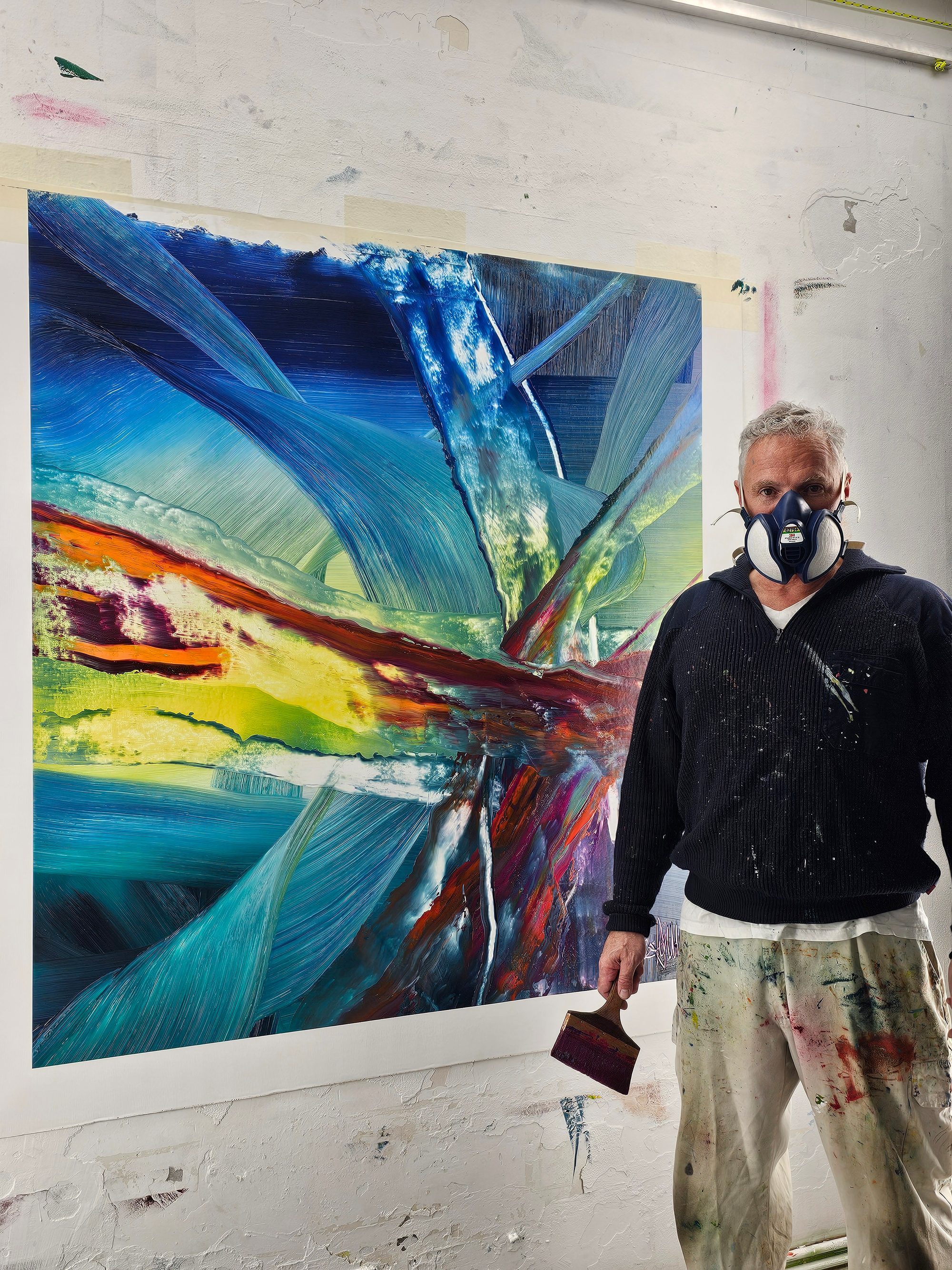
Painting technique is often misunderstood as a set of skills that can be learned, perfected, and repeated. For me, technique is something else entirely. It is not a formula, and it is never fixed. It is a relationship — between material, time, and resistance. In my studio, technique is not about mastering paint. It is about listening to it. Technique as a Living Process I do not begin a painting with a predefined method. Maybe, the ONLY decision I take, is which color I will use as first color. Thereafter, everything else occurs as a chain reaction. There is no checklist, no sequence that guarantees a result. Each canvas establishes its own conditions: size, absorbency, tension, scale. The technique emerges from these conditions rather than being imposed on them. Sometimes paint behaves exactly as expected. More often, it does not. That moment — when the material resists — is where technique becomes meaningful. Instead of correcting resistance, I tend to follow it. Layering, Removal, and Patience Much of my abstract work is built through layers that are partially destroyed. Paint is applied, allowed to settle, and then removed again — wiped away, scraped, diluted, or interrupted. What remains is never accidental, but it is also never fully controlled. This process introduces time into the surface. Not as narrative, but as depth. A finished painting carries traces of decisions that are no longer visible in a literal sense, yet still present in the structure of the surface. Technique, in this context, becomes a form of memory. Brushwork and Distance I am often asked about brushwork — whether it is gestural or restrained. The answer depends on distance. Up close, the surface reveals physical actions: pressure, hesitation, speed. From a distance, those actions dissolve into atmosphere. Technique must function on both levels. If it only works up close, the painting collapses. If it only works from afar, it becomes decorative. A painting of this scale demands a technique that holds together physically and spatially. Control Is Not the Goal Control is useful, but it is not the objective. Too much control results in surfaces that feel closed, finished too early, resolved without tension. I am more interested in a state where the painting remains slightly open — not unfinished, but alive. Technique serves that openness. It allows uncertainty to exist without becoming chaos. In that sense, technique is less about what the hand does, and more about when it stops. Technique as Experience Over time, technique becomes embodied. Decisions happen faster, but not necessarily easier. Experience does not remove doubt; it sharpens it. The more paintings I make, the more I trust hesitation as part of the process. Technique is not something I bring into the studio each day. It is something that forms while I am there. This journal entry is part of an ongoing reflection on painting as practice — not as outcome, but as sustained attention. Published on bertermann.art, the official website of artist Claus Bertermann.
Claus Bertermann – On Painting Between Landscape, Memory and Scale
January 4, 2026

Claus Bertermann – On Painting Between Landscape, Memory and Scale

Claus Bertermann’s work is rooted in the experience of landscape — not as depiction, but as memory, atmosphere, and physical presence. His paintings do not describe places; they evoke them. Working primarily in large formats, Bertermann explores the tension between control and intuition. Each painting evolves through layers: paint is applied, removed, reworked. What remains is not an image, but a state. Painting at Architectural Scale Many of Claus Bertermann’s works exceed two or even three meters in width. This scale is intentional. A painting of this size does not behave like an object — it becomes an environment. The viewer is not standing in front of the painting; the painting stands in front of the viewer. This relationship between artwork and architecture plays a central role in Bertermann’s practice. His paintings are conceived with spatial context in mind — private collections, galleries, and large residential interiors. Color as Emotional Structure Color in Bertermann’s work is never decorative. Muted greens, deep blues, earth tones, and occasional warm accents create a restrained but emotionally charged palette. Rather than defining form, color defines distance, temperature, and time. Some paintings feel like early morning light; others resemble the fading intensity of sunset over water. Process Over Motif There is no fixed motif in Claus Bertermann’s paintings. The process itself becomes the subject. Brushwork, erosion, layering, and pauses are all visible. The painting documents its own making — not as gesture, but as accumulated decisions. This approach places Bertermann’s work firmly within contemporary abstract painting, while maintaining a strong emotional accessibility. A Journal, Not a Portfolio This journal on bertermann.art is intended as an ongoing record — thoughts, works in progress, reflections on painting, exhibitions, and the spaces his works inhabit. It is not a marketing channel. It is a working notebook made public. New entries will appear regularly. Published on bertermann.art, the official website of artist Claus Bertermann.