January 5, 2026
On Scale and the Human Body: When Painting Becomes Physical
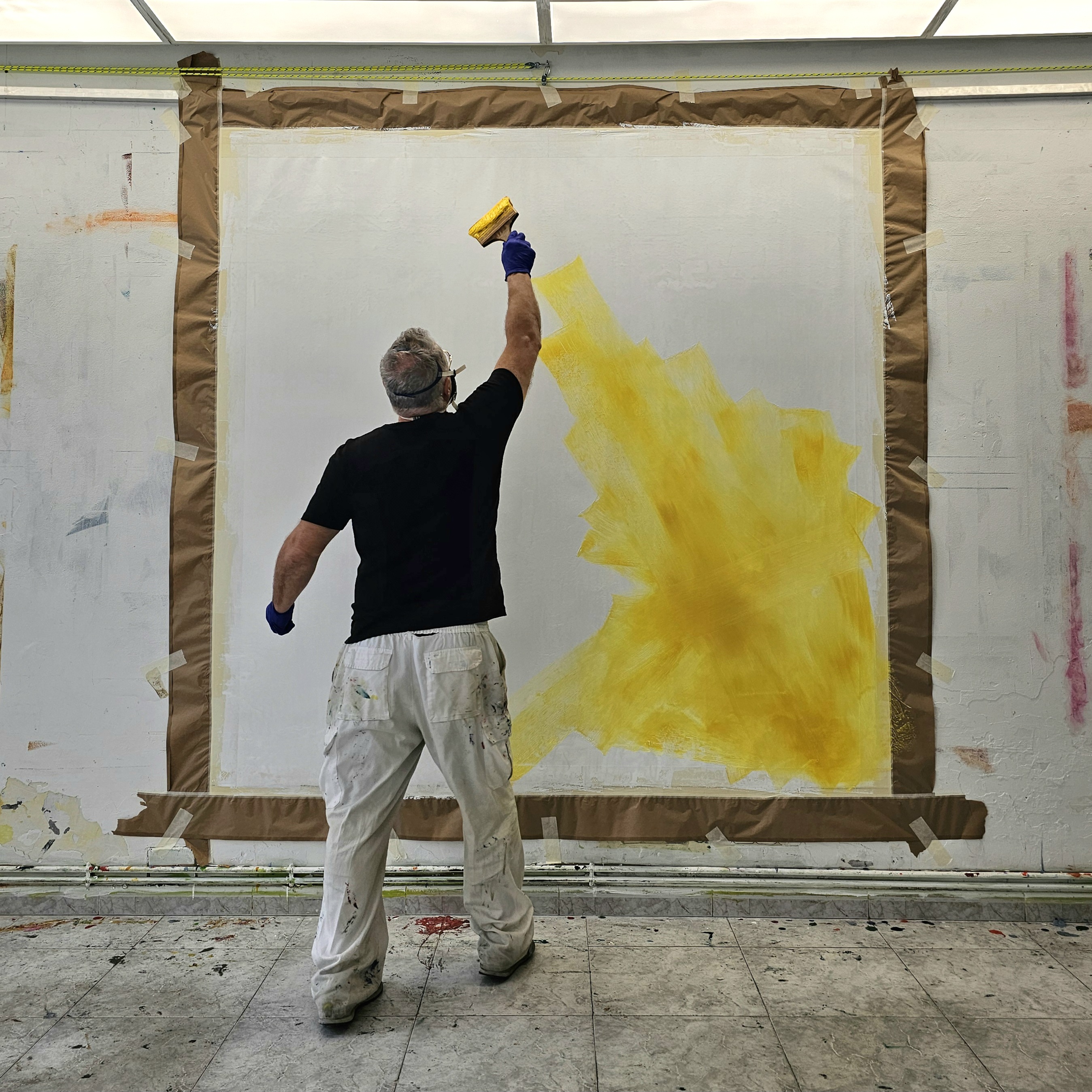
Scale is never a neutral decision.
In painting, scale determines not only how a work is seen, but how it is experienced by the body.
My engagement with large-scale painting is not driven by monumentality or effect. It begins with a simple question: How does a painting occupy space in relation to the human body?
Scale as a Physical Encounter
A large painting cannot be grasped at once. The eye must move. The body must adjust its distance. Perception becomes active rather than passive.
Standing in front of a painting that exceeds one’s own physical dimensions creates a different relationship. The viewer is no longer observing an object; they are sharing space with it.
This shift is fundamental to my work. Scale transforms painting from image into presence.
Distance and Proximity
Large-scale paintings demand movement. From a distance, structure and atmosphere dominate. Up close, the surface reveals material decisions: layers, erosion, pressure, hesitation.
The work functions only if it holds together across these distances.
Scale therefore becomes a test of coherence.
If a painting collapses when approached, it fails.
If it only works from close proximity, it becomes insular.
The body mediates between these two conditions.
The Body as Measure
Rather than using architectural measurements alone, I think in bodily terms. Shoulder width, reach, height, peripheral vision — these are implicit references during the process.
The painting is adjusted repeatedly until its internal rhythm aligns with the physical presence of a standing viewer. Not in a literal sense, but perceptually.
This is especially relevant in private interiors and architectural contexts, where the painting becomes part of everyday movement rather than a fixed viewing situation.
Scale and Restraint
Working large does not imply excess. On the contrary, scale requires restraint. Every decision is amplified. Small gestures become dominant. Unnecessary elements cannot hide.
This discipline sharpens the work.
Large paintings tolerate fewer solutions, not more. They demand clarity and reduction. Scale exposes weakness, but it also intensifies precision.
Beyond Representation
At this scale, representation becomes secondary. The painting does not describe space — it asserts itself within it.
What matters is not what the painting shows, but how it alters the room it inhabits. Light, proportion, and movement are subtly recalibrated by its presence.
The human body becomes the reference point through which the painting is continuously reactivated.
Scale as Responsibility
Large-scale painting carries responsibility. It cannot be decorative. It must justify the space it occupies.
When successful, the painting does not dominate the viewer. It holds them. Quietly, steadily, without insistence.
This journal entry continues an ongoing reflection on painting as a spatial and bodily experience. Further observations from the studio will follow here on bertermann.art.
Published on bertermann.art, the official website of artist Claus Bertermann.